The Engraver's Demon

I.
In the summer of 1633, the French army completed its occupation of the Duchy of Lorraine. It had been coming for two years. This was Cardinal Richelieu's methodical dismemberment of the last substantial buffer state on France's northeastern border. Richelieu acted with the administrative patience of a man who understood that territory taken by treaty required less maintenance than territory taken by battle. The duchy's capital, Nancy, fell without a siege. Louis XIII entered in triumph, and someone, somewhere in the machinery of royal patronage, decided the occasion required an engraver.
The commission went to Jacques Callot. He was the obvious choice, Europe's most technically accomplished printmaker. Born in Nancy, he trained in Rome and Florence, then returned twelve years earlier on his Florentine patron's death. He spent his career making images for power: tournament spectacles, siege maps, festival books for the courts of Lorraine and France. He knew how a commemorative plate should look and how to make one. By 1633, he was watching his homeland be absorbed by the same state that had commissioned him to celebrate it.
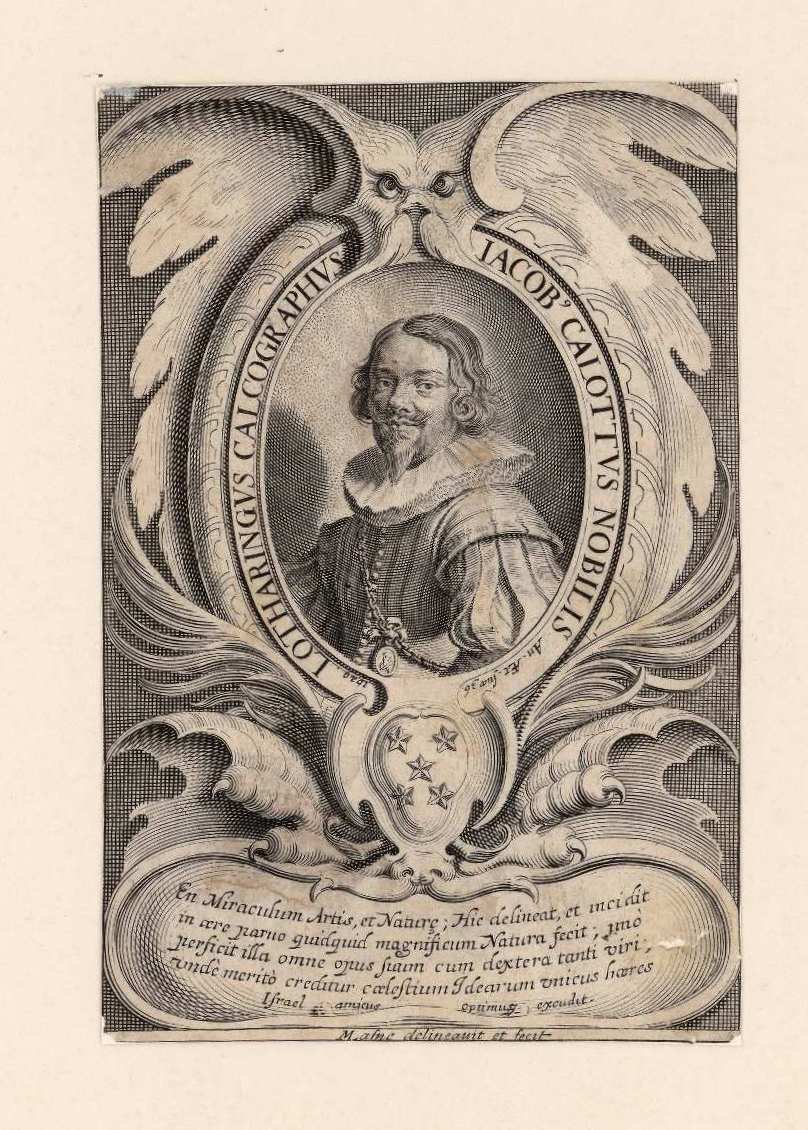
What happened next is preserved in the biographical literature with the tenacity of stories that may be slightly too good to be entirely true, but are certainly true in their essentials. Callot refused. The king raised the offer. Callot refused again. The legend gives him a line that he would sooner cut off his right hand than use it on such a commission. This line may be apocryphal, but it is nevertheless precisely right.
He was dead within two years, at forty-three. The occupation was still in place, and the plate was never made. This story is about what his line did carry: a moral tradition twelve centuries in the making, a series of seven small prints at the turn of his career, and what happened when a Dutch master engraver in Geneva found them on a screen four hundred years later. Using a different tool and a different material logic, this engraver began to make them again.
II.
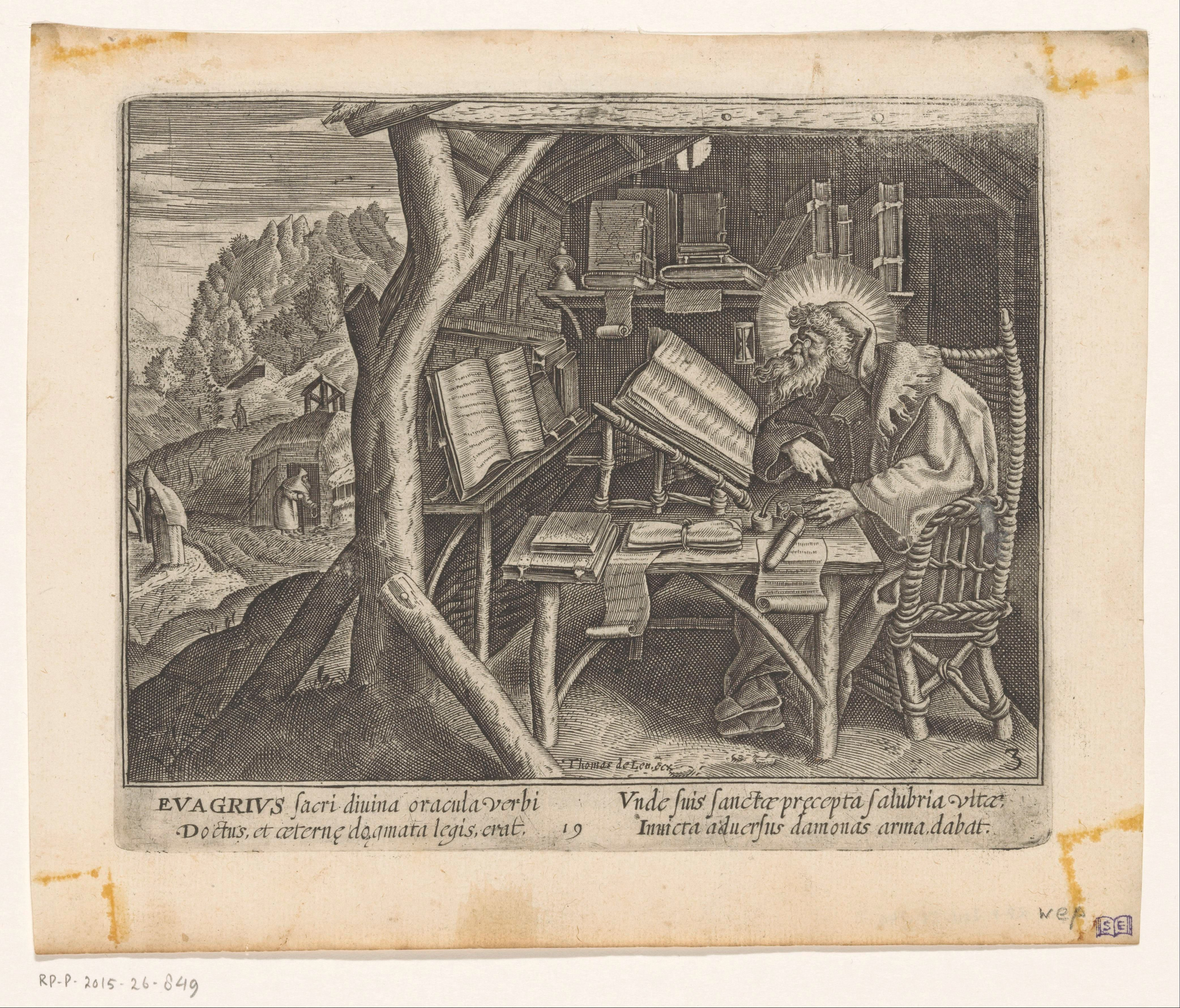
The seven deadly sins were born in the desert. The monk Evagrius Ponticus, writing around 375 AD in the Egyptian Nitrian desert, was the first to systematically enumerate them. He counted eight rather than seven, and called them not sins but logismoi: generic thoughts, demonic temptations that obstructed a monk's progress toward apatheia, the spiritual detachment that was the precondition of contemplative union with God. His list was a clinical instrument. Gluttony came first because the body's demands were the most immediate battlefield. Pride came last because it was the most dangerous, a temptation of the intelligent faculty itself, the vice that persuaded the advanced practitioner that his virtue was his own achievement rather than God's gift. Acedia, translated inadequately as sloth, he considered the most complex: the daemonium meridianum, the noonday demon. It induced not simple laziness but a paralysing restlessness, the sense that this cell, this vocation, this moment was the wrong one.
John Cassian carried the framework west in the early fifth century. Pope Gregory I reduced the eight to seven in the late sixth century, elevating pride to the status of root and queen, the generative condition from which all other vices spring, their general commanding the seven captains into battle for the human soul at every hour. Thomas Aquinas gave the system its definitive intellectual architecture in the thirteenth century, identifying forty-four daughter vices flowing from the seven capitals as tributaries from a source. By the time the tradition reached the visual arts of the Northern Renaissance, it carried over a thousand years of accumulated moral weight.
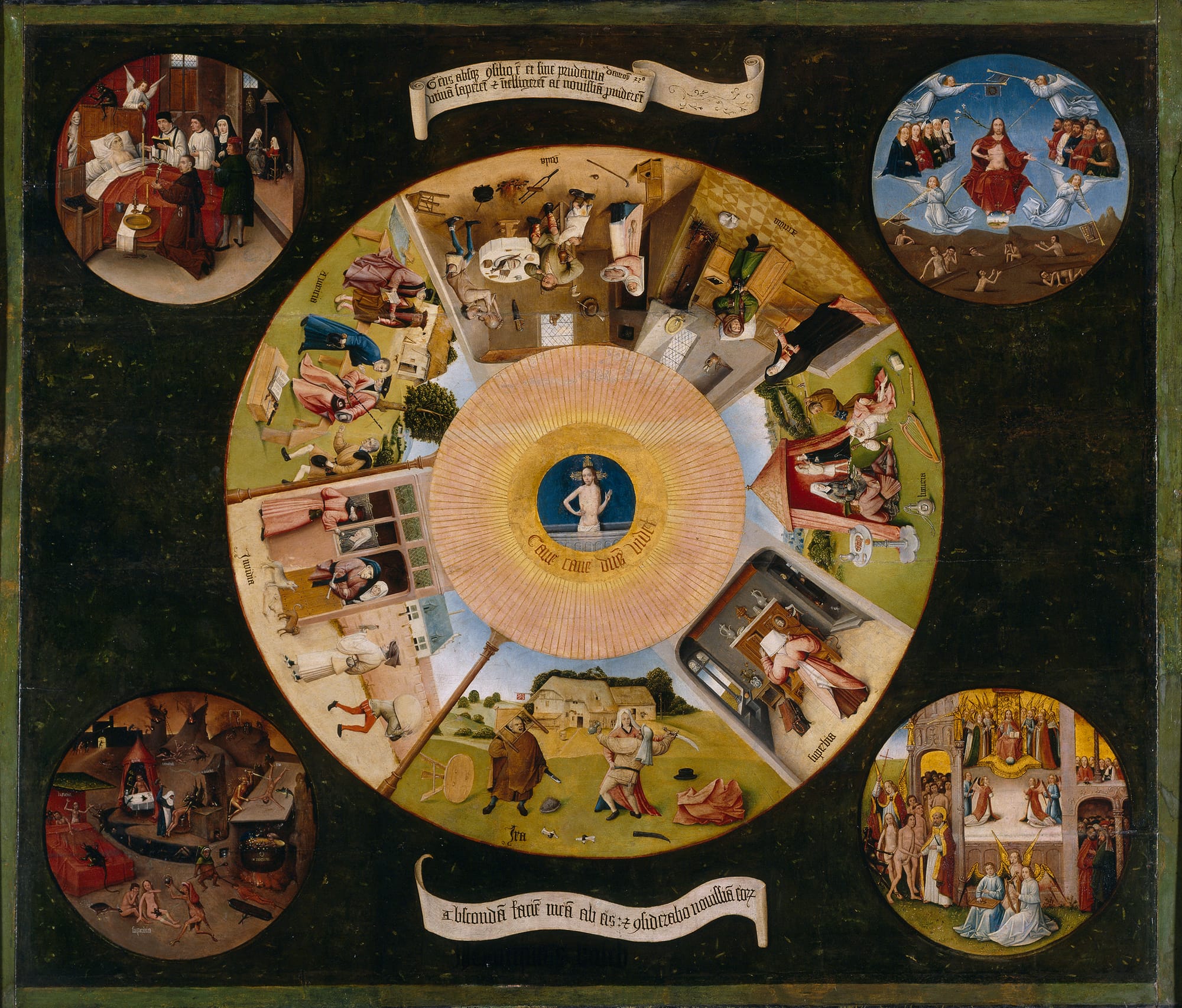
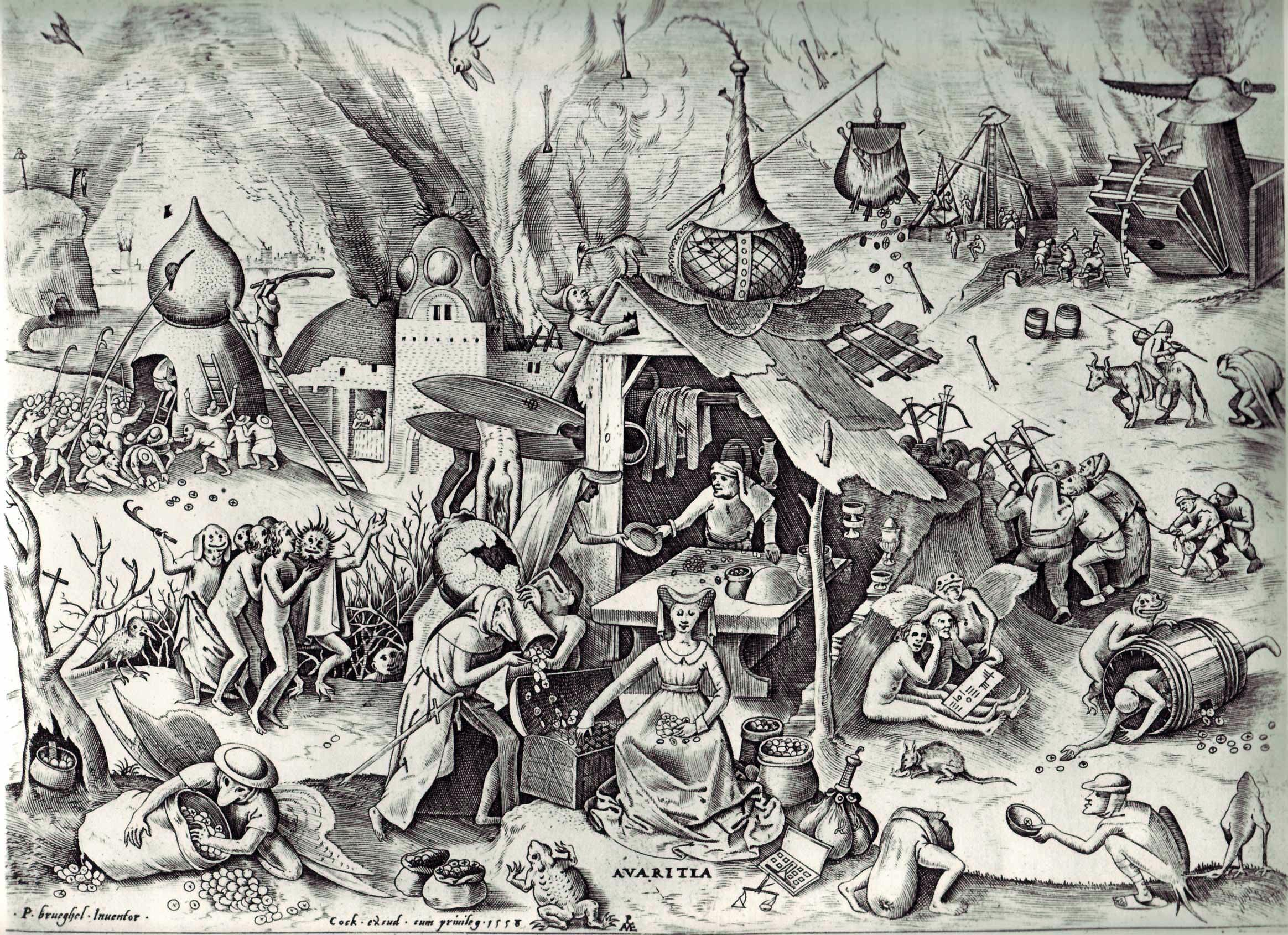
Hieronymus Bosch arranged the sins as scenes from daily Netherlandish life in a circle representing the eye of God: wrath as a tavern brawl, greed as a corrupt judge, pride as a woman before a demon-held mirror. Pieter Bruegel returned them to the printmaker's medium in the 1550s, populating his compositions with hybrid demons and deformed figures in scenes of social disintegration. Both men worked at scale and in crowds. Their sins inhabit worlds, environments of consequence, populated by victims, bystanders and demons in architectural relationship with one another. When Callot came to the subject, he did something the tradition had not quite done before. He made each sin a single figure, alone.
Callot was born in Nancy in 1592, the son of a herald-at-arms at the court of the Duke of Lorraine. At twelve, he ran away to Italy with a band of gypsies, headed for Rome. He was apprenticed to a goldsmith, a training in the exact manipulation of metal at a small scale that would inform everything that followed, and by 1607, he was studying engraving in Rome and etching in Florence. By 1612, he was in Florence, where he would spend nine years documenting the grandest courtly spectacle imagery of the age. He was working for the Medici court on tournaments, festivals, theatrical entertainments preserved in print for audiences who had not been there, crowds of hundreds rendered in precise relationship to architectural space.
During these years, he made the technical innovations that would characterise his medium for the following century. The first was the échoppe, an etching needle with a slanted oval tip that could be rotated as it moved through the ground, presenting its narrow edge to produce a fine line, its broad face to produce a swelling one. The result was a modulated line that could thin and thicken as it moved, imitating the engraver's burin without the burin's laborious resistance against metal. The second was the ground itself: replacing the standard wax formula with a varnish derived from lute-makers, borrowed from a different craft, that withstood multiple acid baths and allowed staged biting, lines deepened by successive immersions printing darker than those protected from the second or third bath. Together, the échoppe and the varnish ground produced etchings that read with the exactness and tonal richness of engravings, made at the speed of drawings. Rembrandt collected the prints. Abraham Bosse documented the techniques in the first published manual of etching and carried them across Europe.
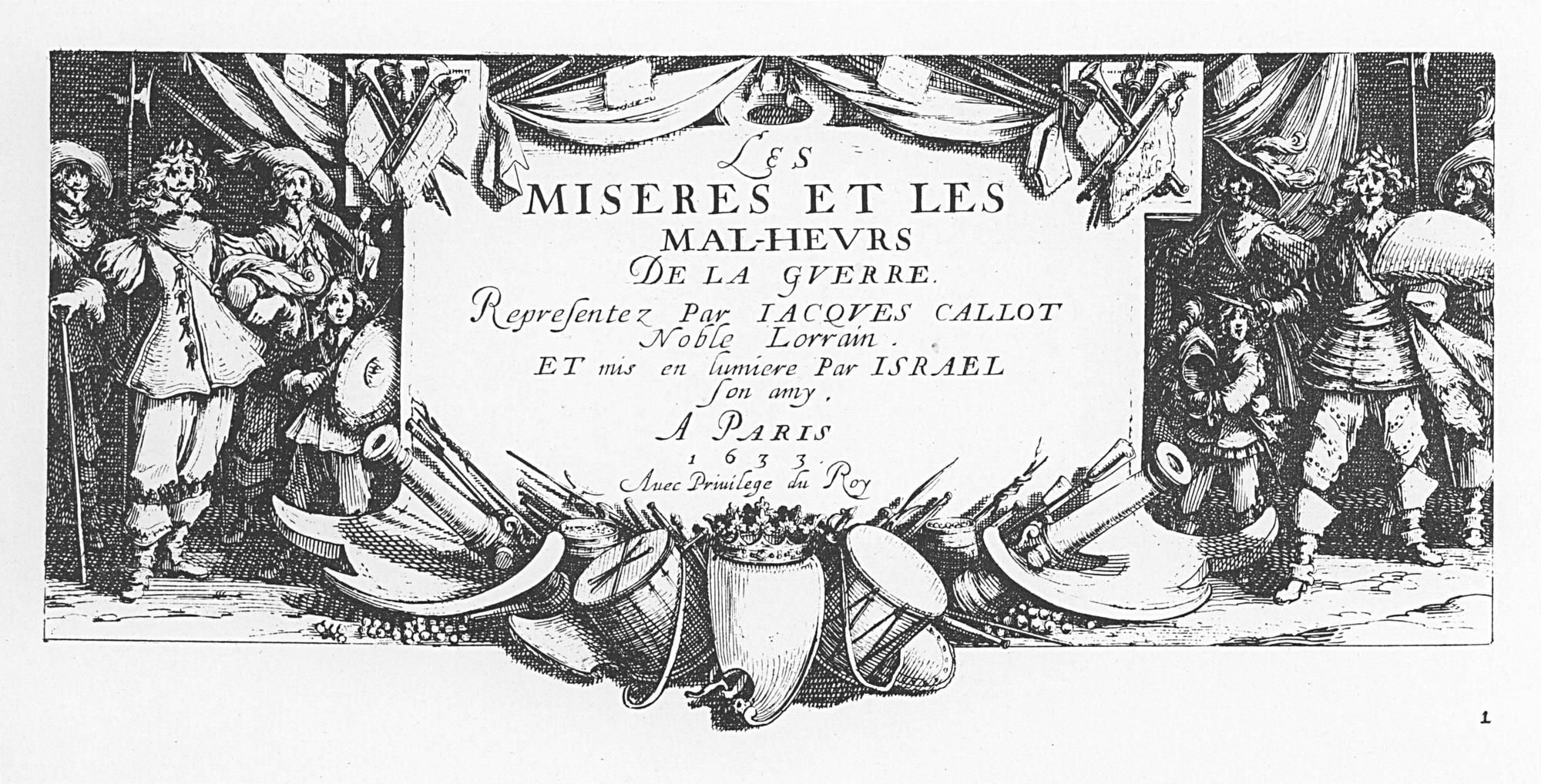
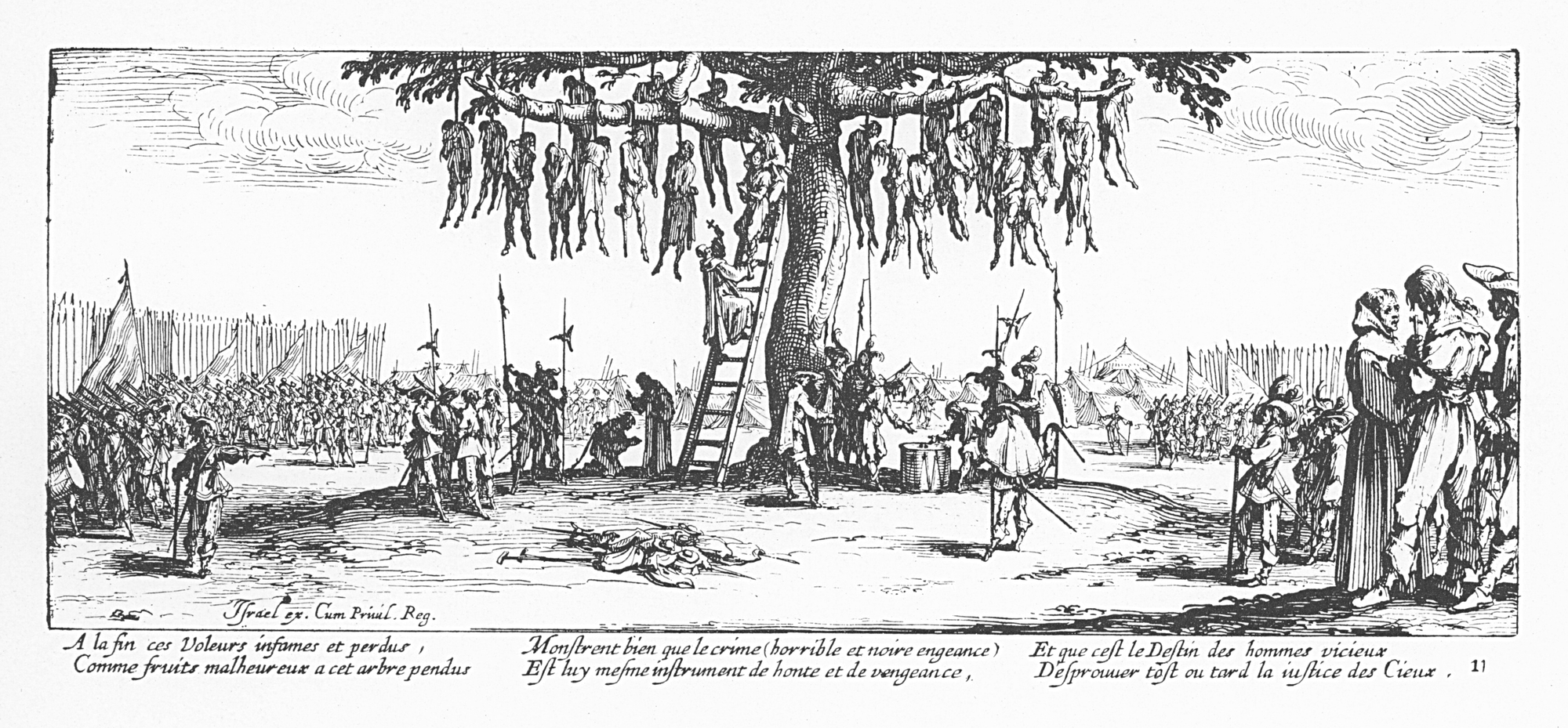
Cosimo II de' Medici died in 1621. Callot returned to Nancy, and the moral register of his work shifted from courtly spectacle to beggars, cripples, the displaced, and finally to the two great series on the miseries of war that stand as the first sustained visual indictment of military violence in Western art. It is somewhere in the changeover between these two periods that he produced the seven prints at the centre of this story. The precise dating is disputed; one Gluttony impression carries a date of 1619, while the National Gallery of Art and the Royal Collection both place the series as probably after 1621. The Lieure catalogue assigns them numbers 354 through 360. Each plate measures approximately 5.8 by 7.5 centimetres, smaller than a playing card. Each depicts a single figure with its animal attribute and demonic attendant, set against a minimal ground, the surrounding space left open.
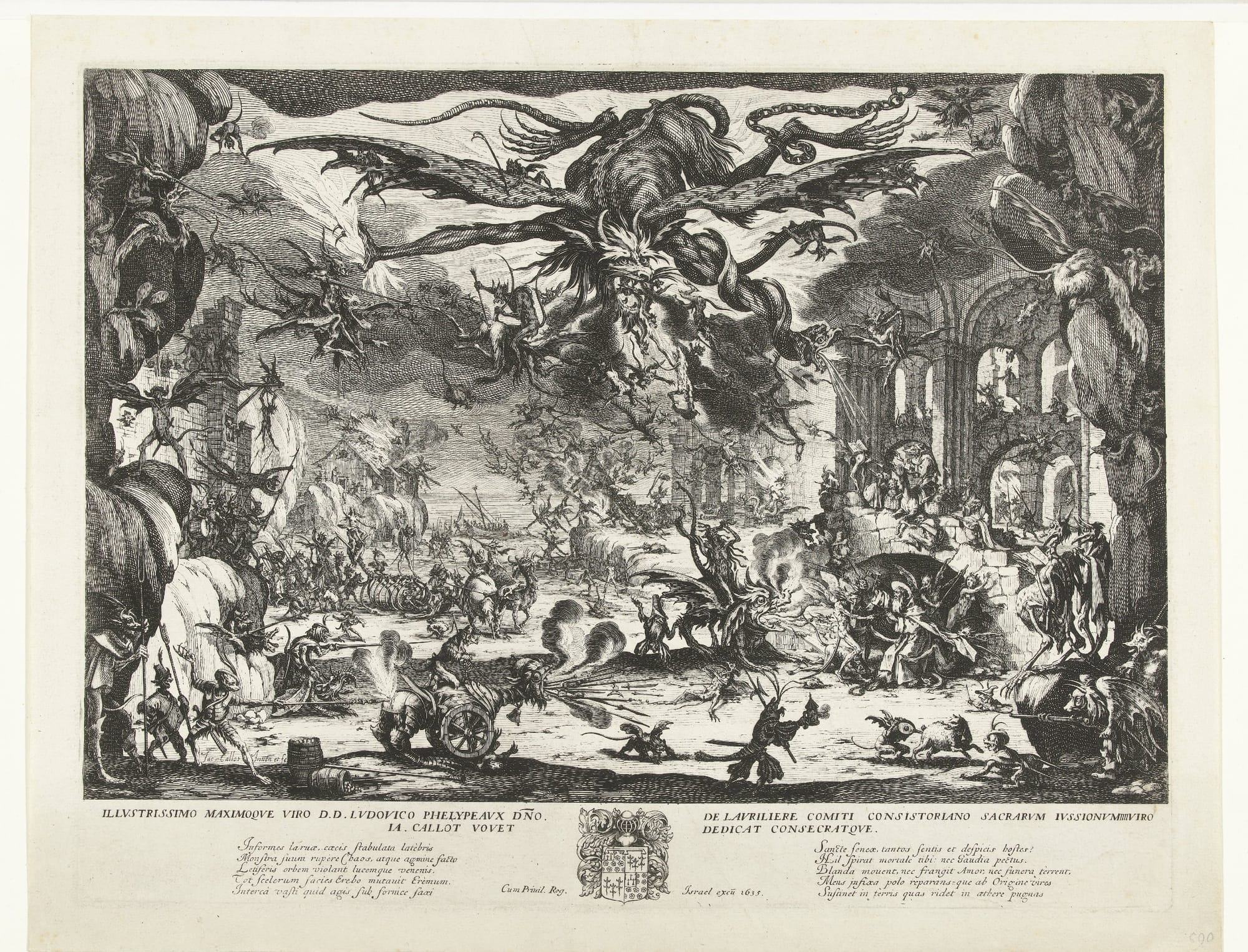
Bosch had needed a tabletop painting. Bruegel had needed a full sheet of engraving, with monsters, crowds, and architectural chaos. Callot did it in the space of a playing card, seven times, and left the rest of the field empty.
III.
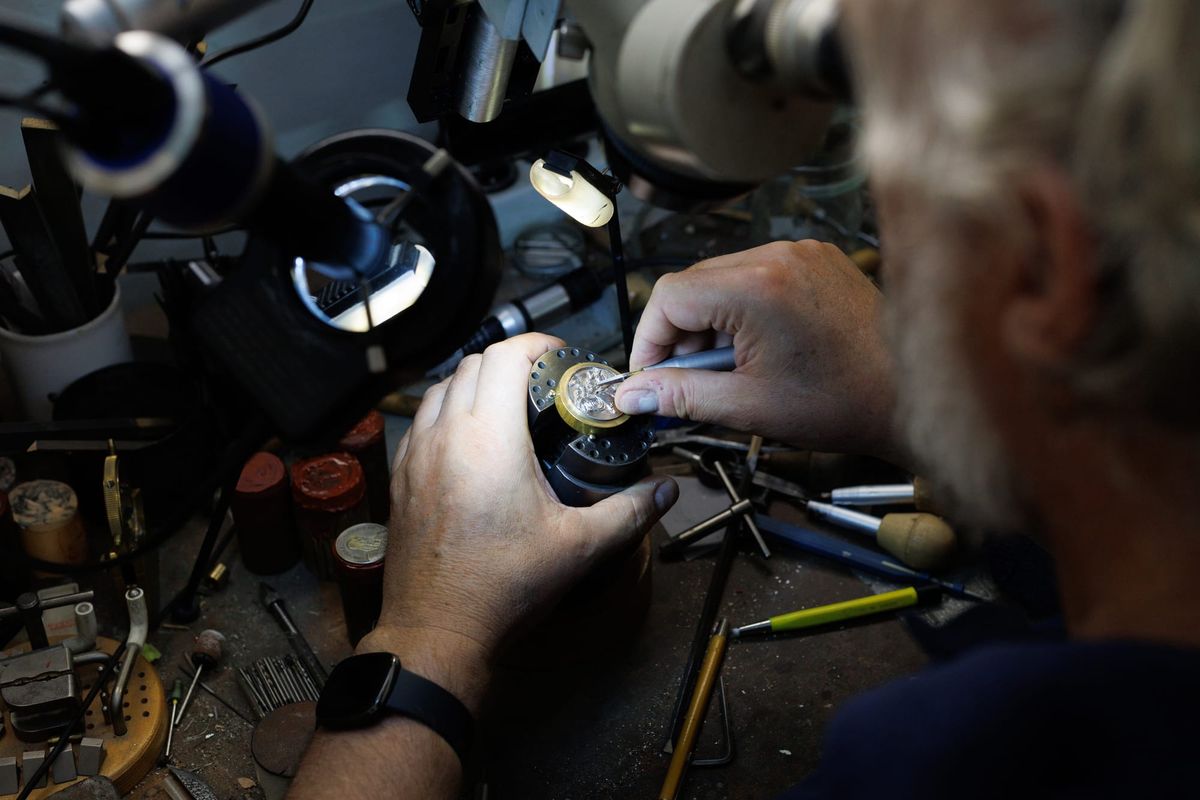
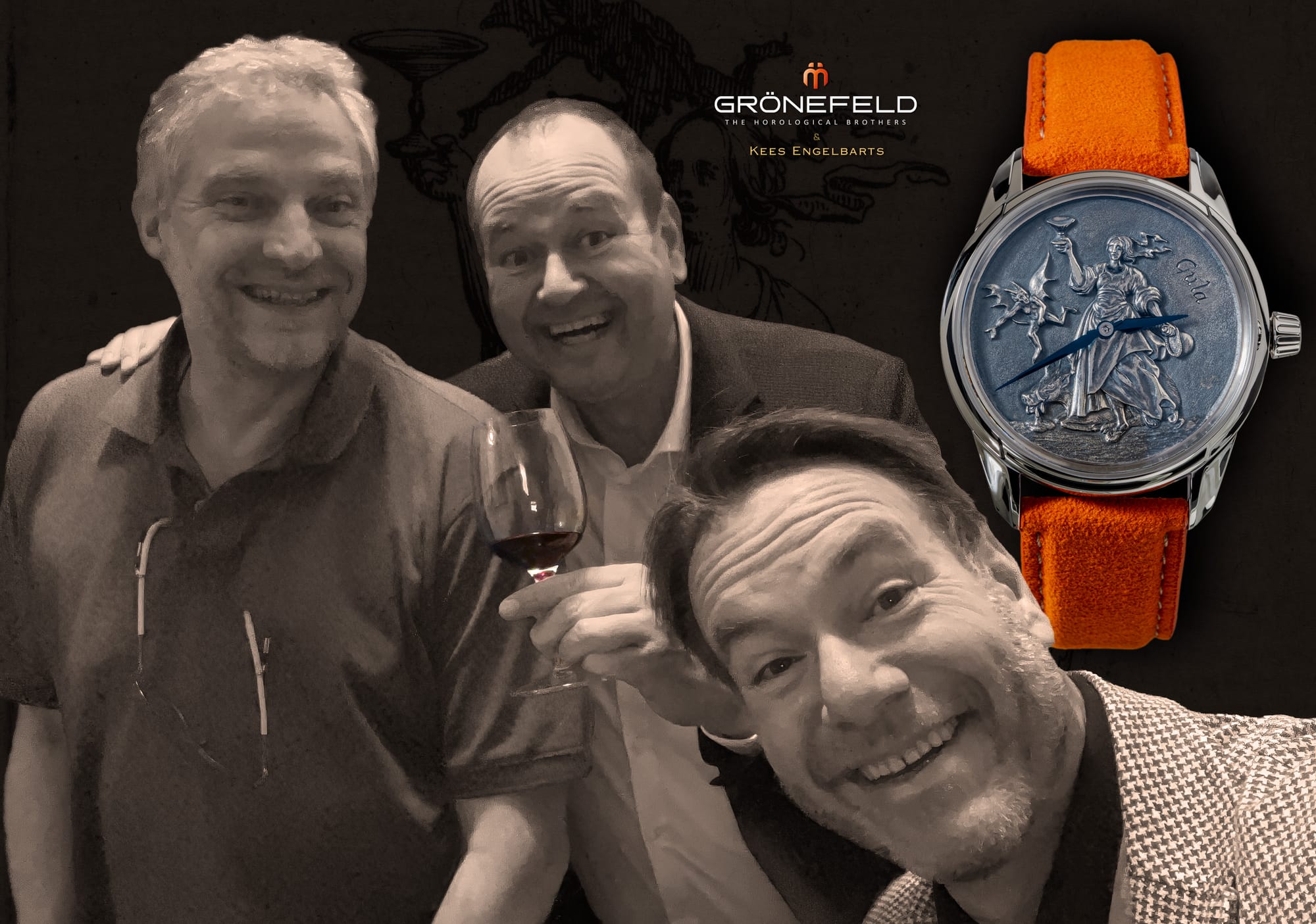
In 2022, in Geneva, Kees Engelbarts sat at a screen and searched for images of the seven deadly sins. Engelbarts is Dutch, one of the most accomplished dial engravers working in the watch industry, based in Geneva for decades but formed in the Netherlands. The Gronefeld brothers, Bart and Tim, also Dutch, working from Oldenzaal, had been friends with him for nearly thirty years. They had agreed on a theme for a new collaboration. Engelbarts needed source material that would translate into a circular field. He found the Callot series in the Rijksmuseum's open-access digital archive, held there because Rembrandt, the gravitational centre of that institution's identity, had collected them. The chain runs from Callot's studio in Nancy through Rembrandt's Amsterdam to a screen in Geneva, and it runs through the recognition that small things can carry large arguments.
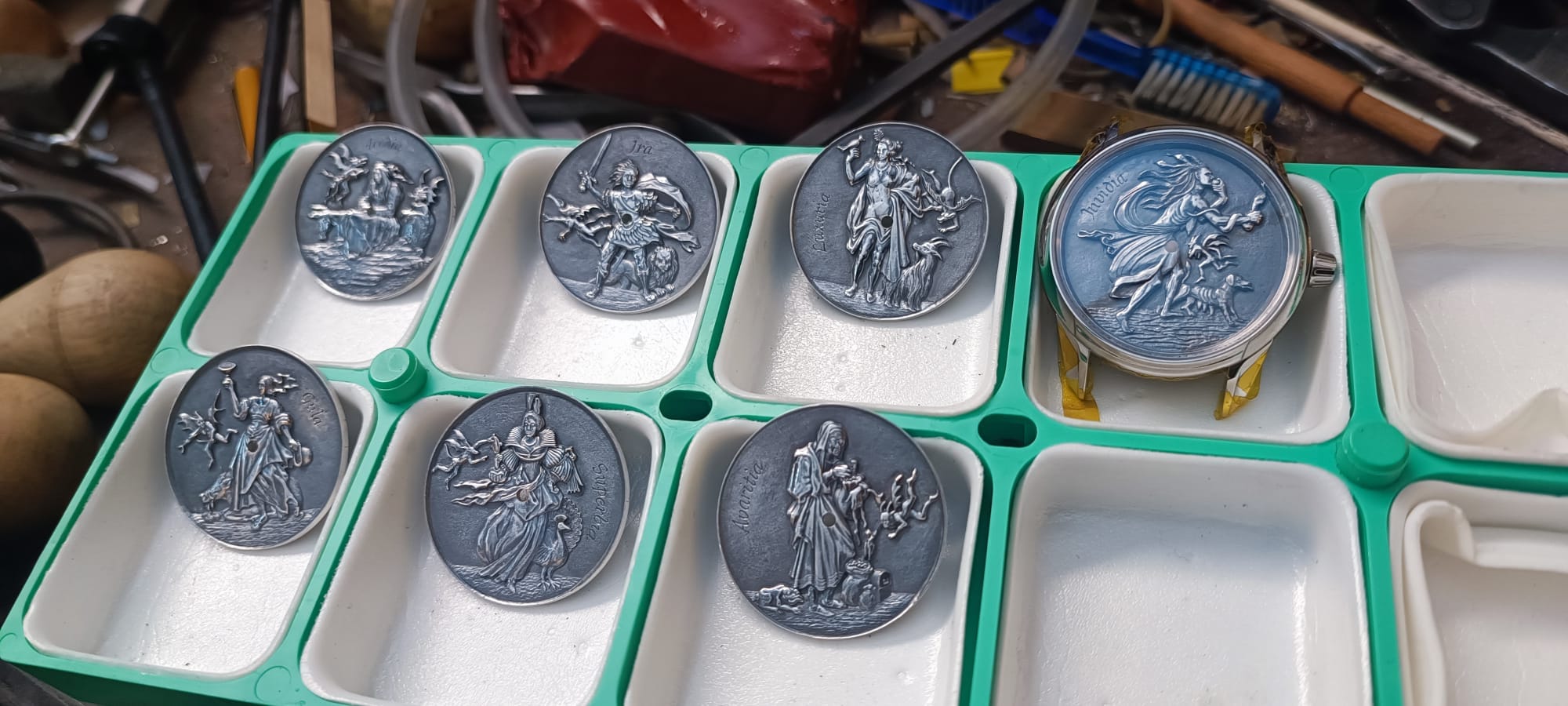
What Engelbarts was reading on that screen was not Callot's plate, not his ink, not even the paper pressed against the inked copper. It was a photographic reproduction of an impression pulled from a plate that had passed through multiple states and four centuries of hands. Between Callot's échoppe moving through lute-maker's varnish and Engelbarts's graver moving through metal, there is a long chain of mediation: acid, ink, paper, impression, digitisation, pixels. Every generation that has engaged with the sins tradition has worked from a mediated version of what came before: Cassian translating Evagrius's Greek into Latin, Gregory reducing eight to seven, Bosch rendering theology as Netherlandish genre scene, Callot stripping it to a single figure on a playing card. Engelbarts's pixels are the most recent form of that mediation, and the objects that resulted from them are the latest in a tradition that has always moved by translation.
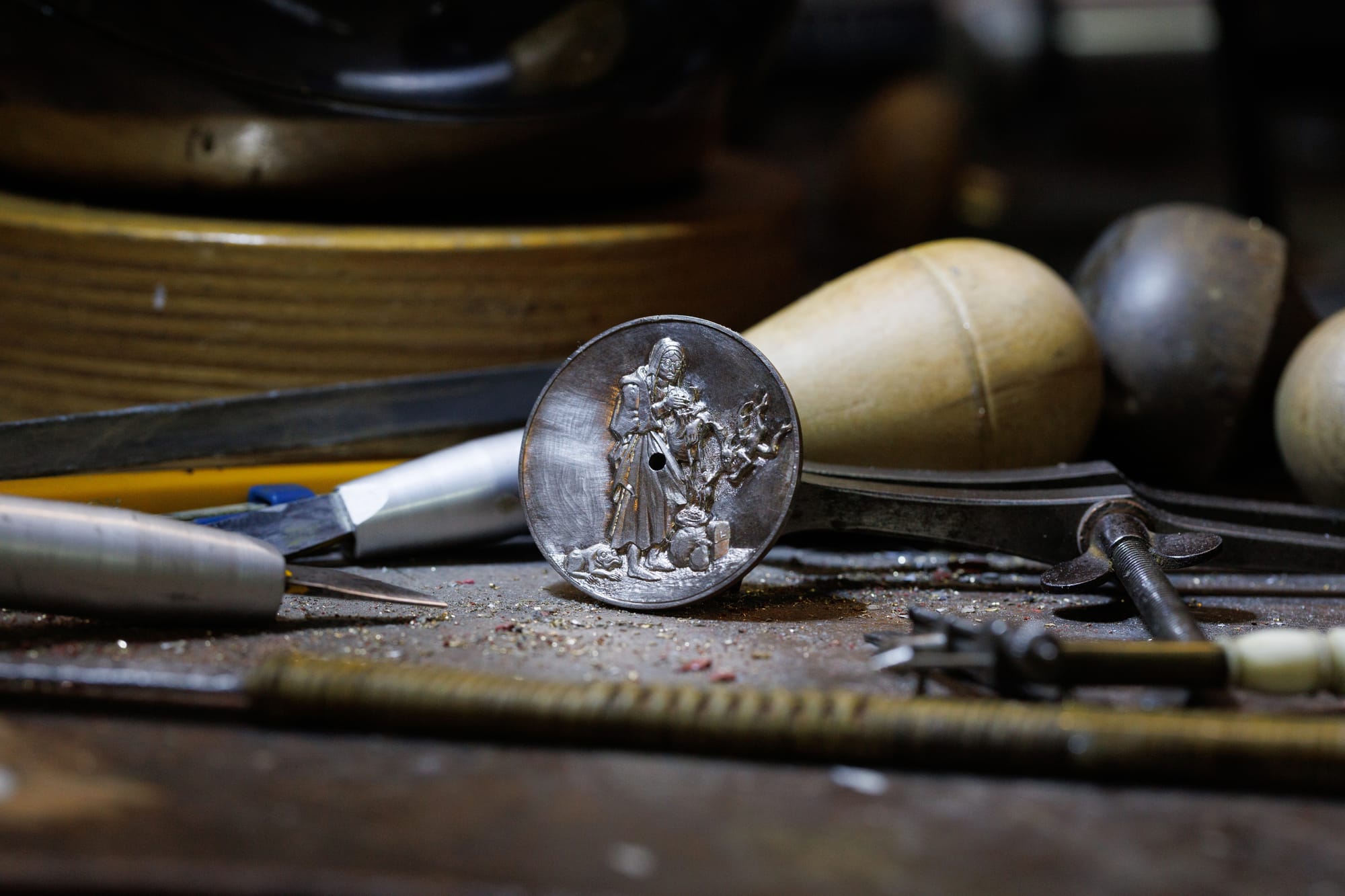
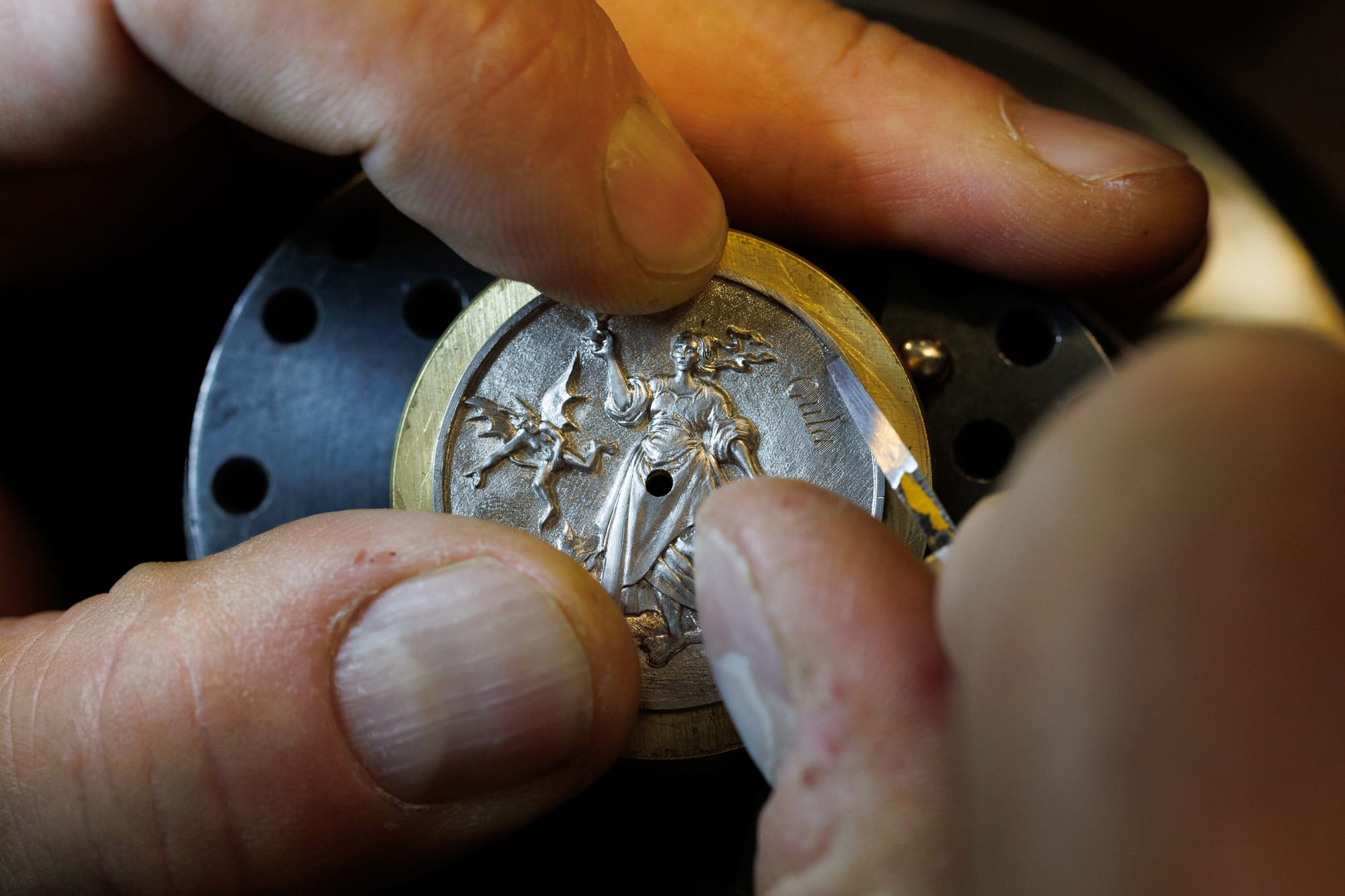
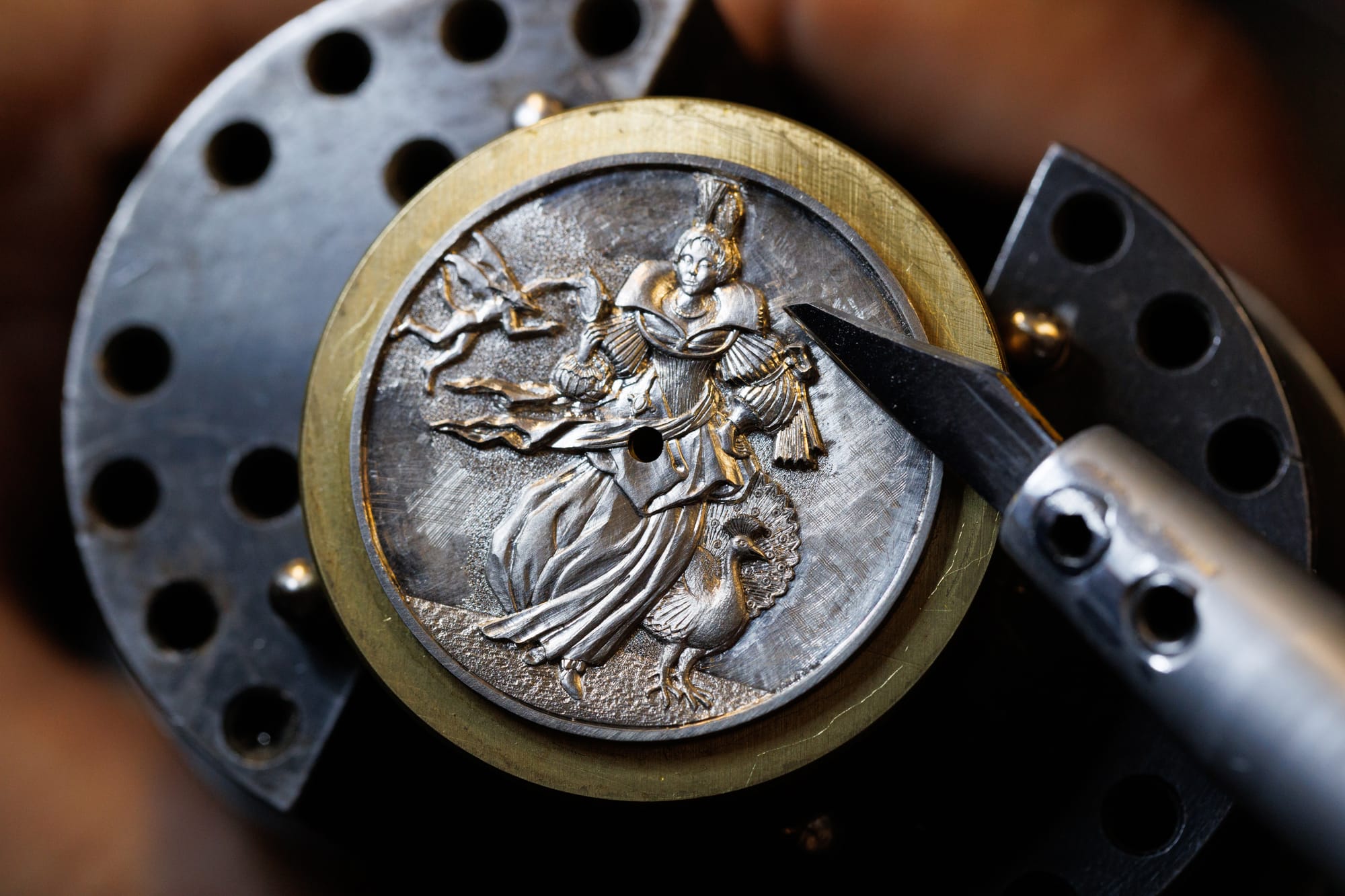
The translation problem was specific to each of the seven. Callot's prints are rectangles. A watch dial is a circle with a centre that pulls, a perimeter that curves, and zones of visual tension that a rectangle does not. Every element that falls outside the circle must move inside it or be abandoned. Every line Callot achieved through the pressure of the échoppe must be restated in relief, metal raised above the field, read as illumination and shadow in three dimensions rather than ink pressed into recessed lines on paper. The calibration is different for each of the seven, and the differences are instructive.
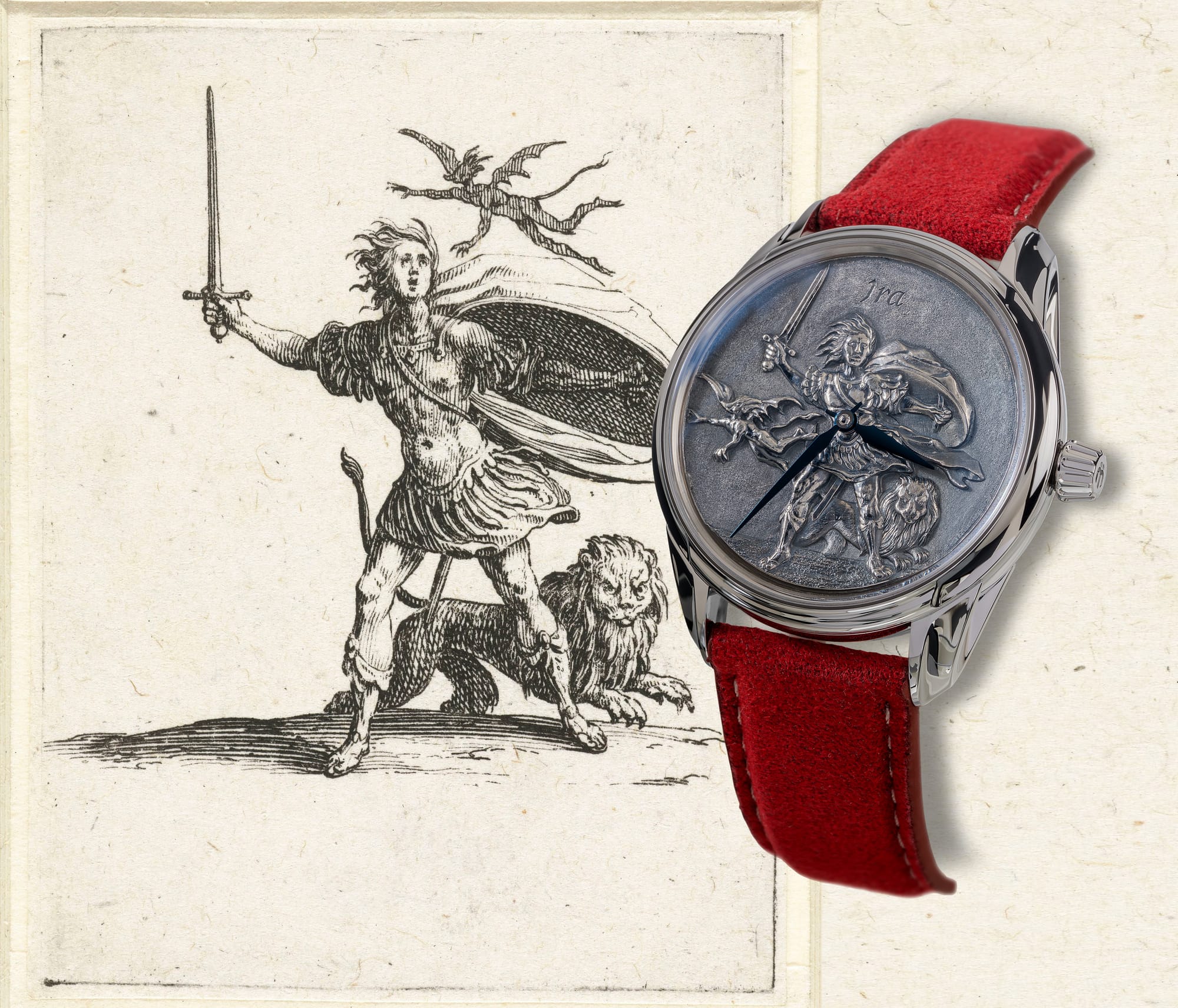
Ira required minimum intervention. Callot's Anger, an armoured warrior with a raised sword, a billowing cloak, and a lion crouching at his feet, already possessed the diagonal energy that suits a circular field. Engelbarts brought the demon closer into the figure's orbit, and the composition arrived intact.
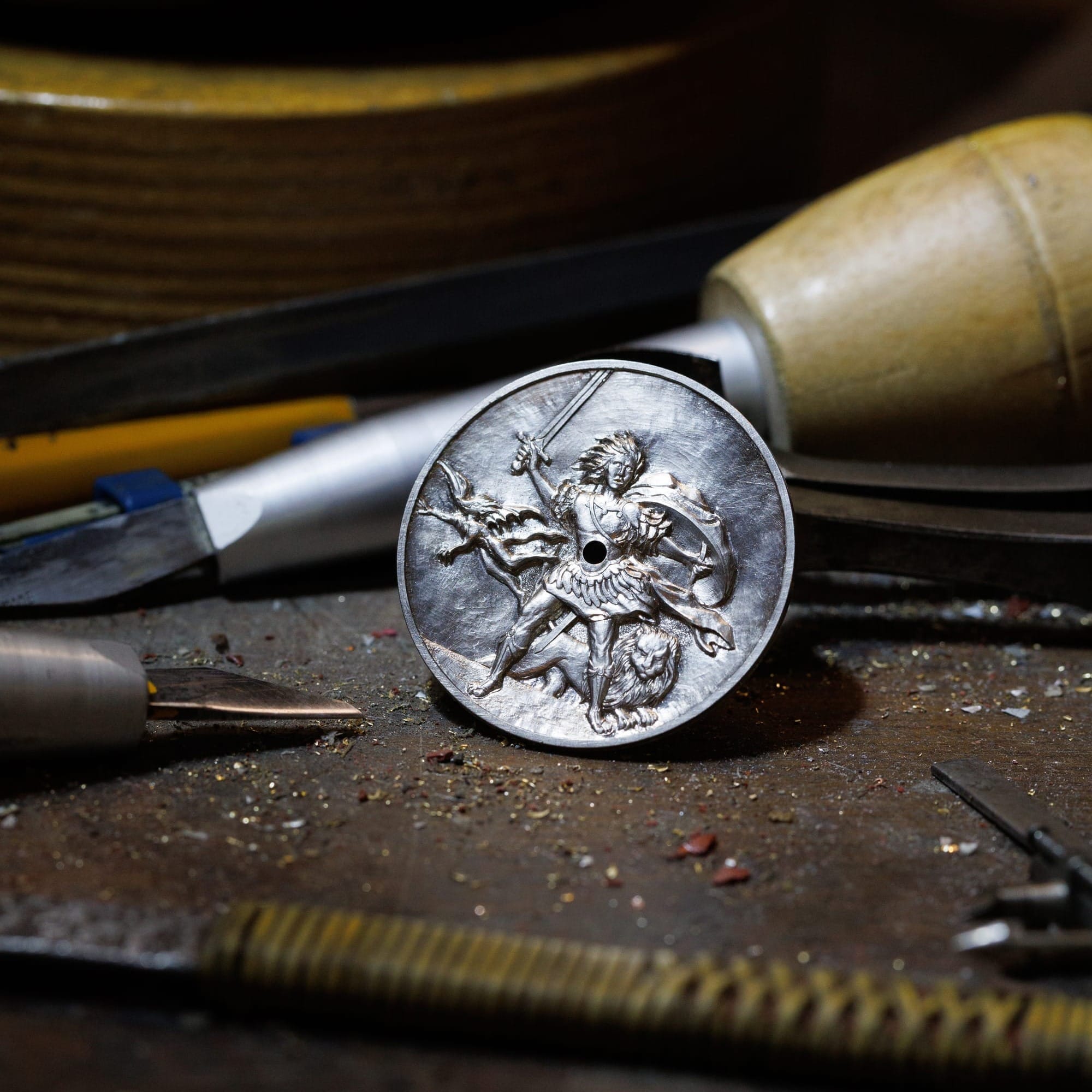
The red strap is exact: blood, fire, the colour of wrath in the moral tradition since before the medieval morality plays.
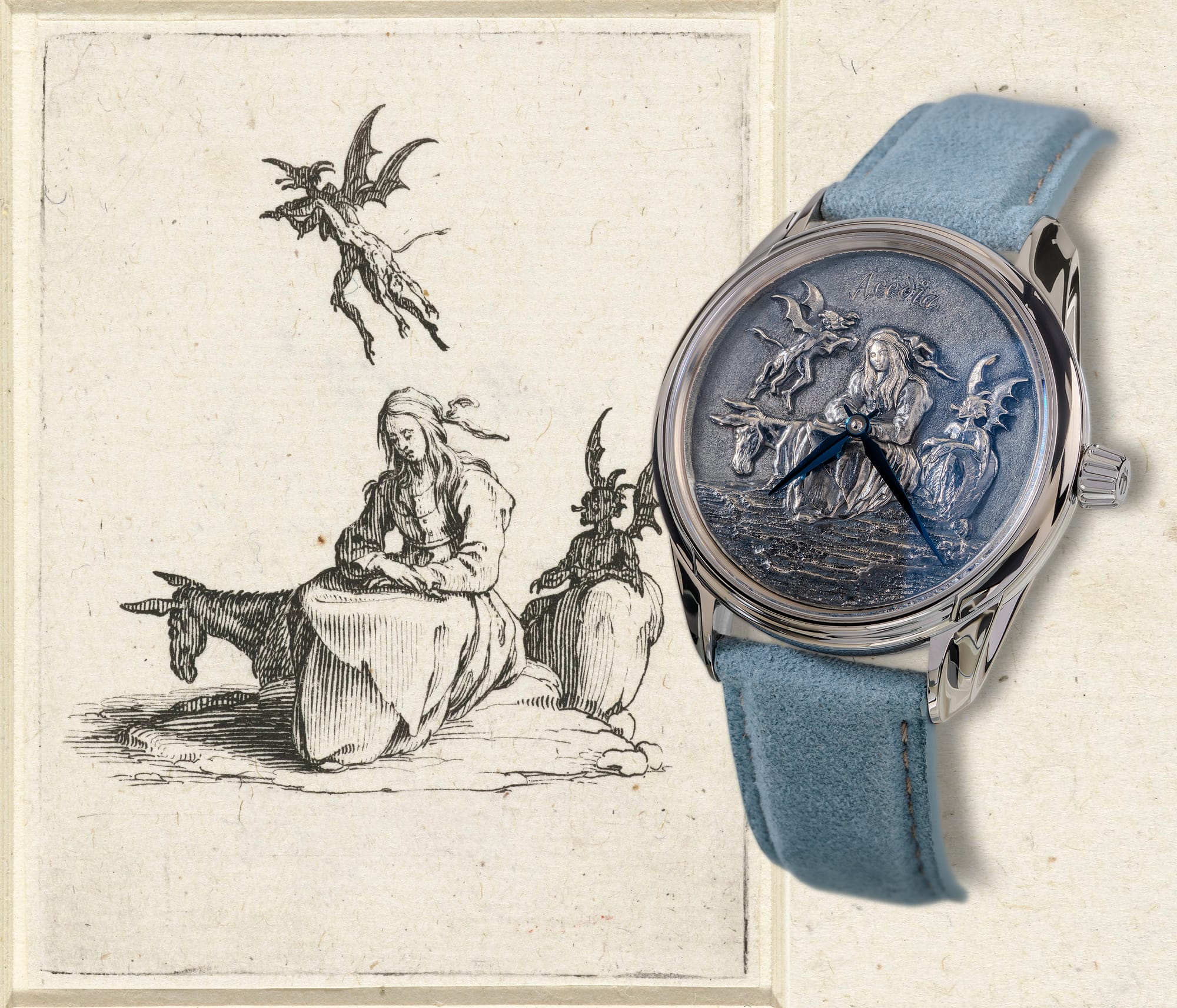
Acedia required more surgery. Callot's Sloth is horizontal: a seated woman, bowed and inert, the donkey to her left, the flying demon displaced to the upper-left corner, distant from the figure, almost detached. Engelbarts brought it down and inward, placing it directly above and behind her left shoulder, in active proximity rather than remote attendance. The crouching demon to the right has been given more physical presence to balance the circle. The moral adjustment is as significant as the spatial one: in Callot the demon watches from a distance; on the dial it presses in. The pale blue strap: the cold, affectless palette of spiritual torpor.
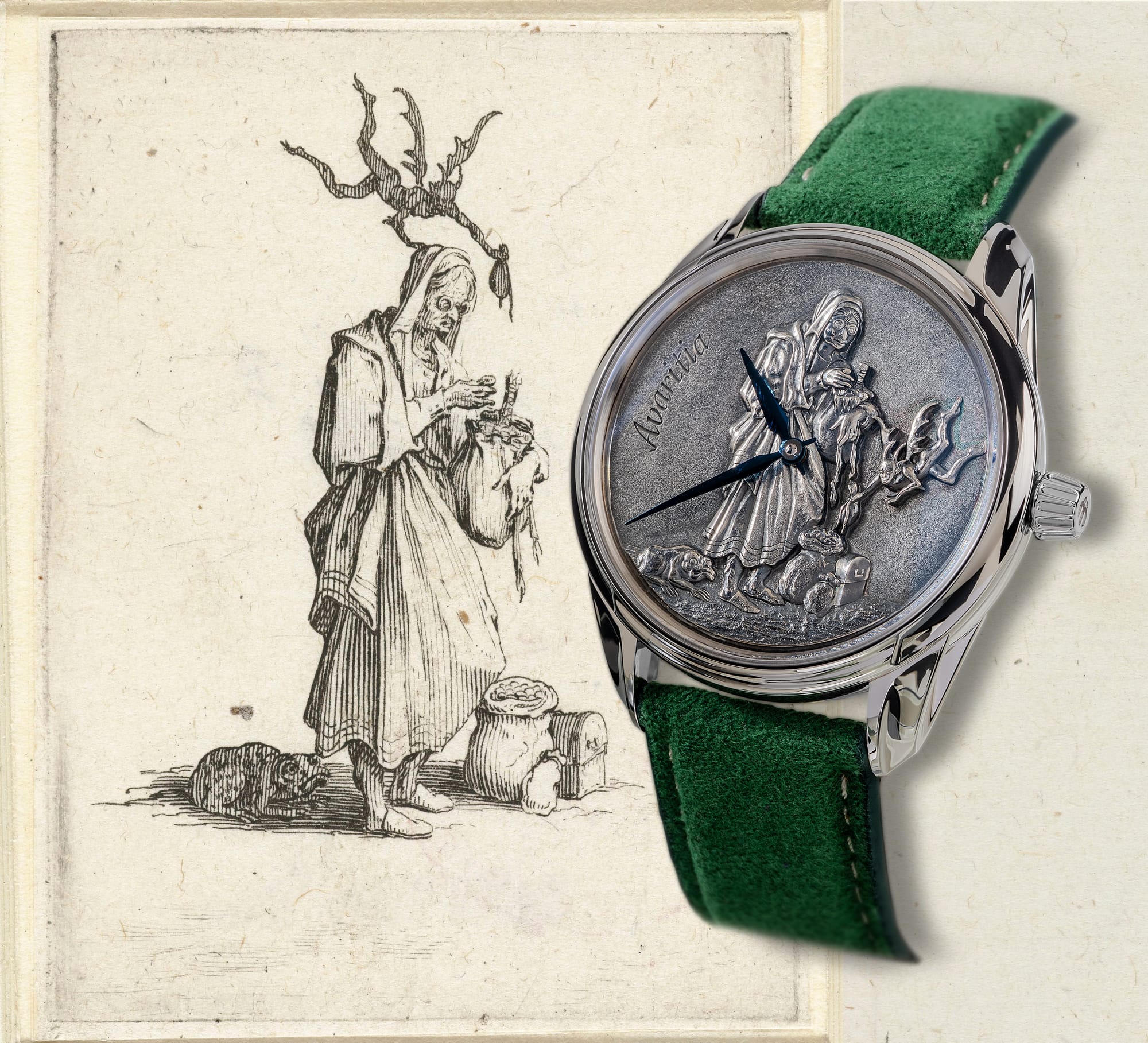
Avaritia's tall, near-vertical figure risked reading as inserted rather than belonging. Engelbarts brought the demonic attendant, marginal in Callot, into active lateral relationship with the central figure, creating a triangular tension between woman, demon and treasure that distributes weight across the circle.
Green for the strap: the colour of acquisition, of money, of the specific envy that avarice breeds in those who witness it.
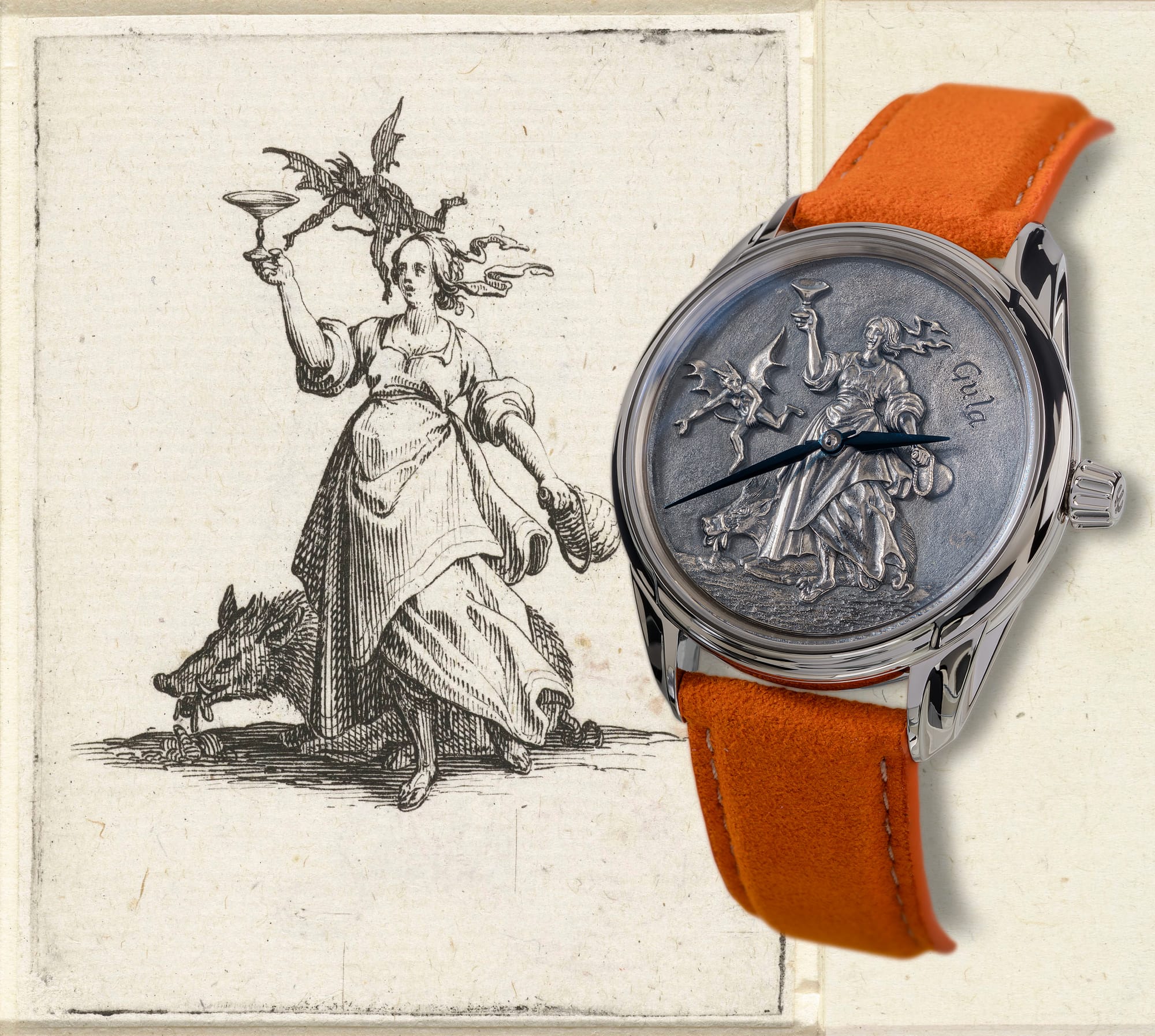
Gula worked because Callot gave her movement. The striding figure with cup aloft already generated the diagonal energy the circular format rewards. Engelbarts pulled the demons into closer orbit, almost a crown of vice around the raised cup, and maintained the pig subordinated to the lower register.
Orange: the colour of appetite and warmth, the sensory excess that gluttony was always understood to be a gateway toward.
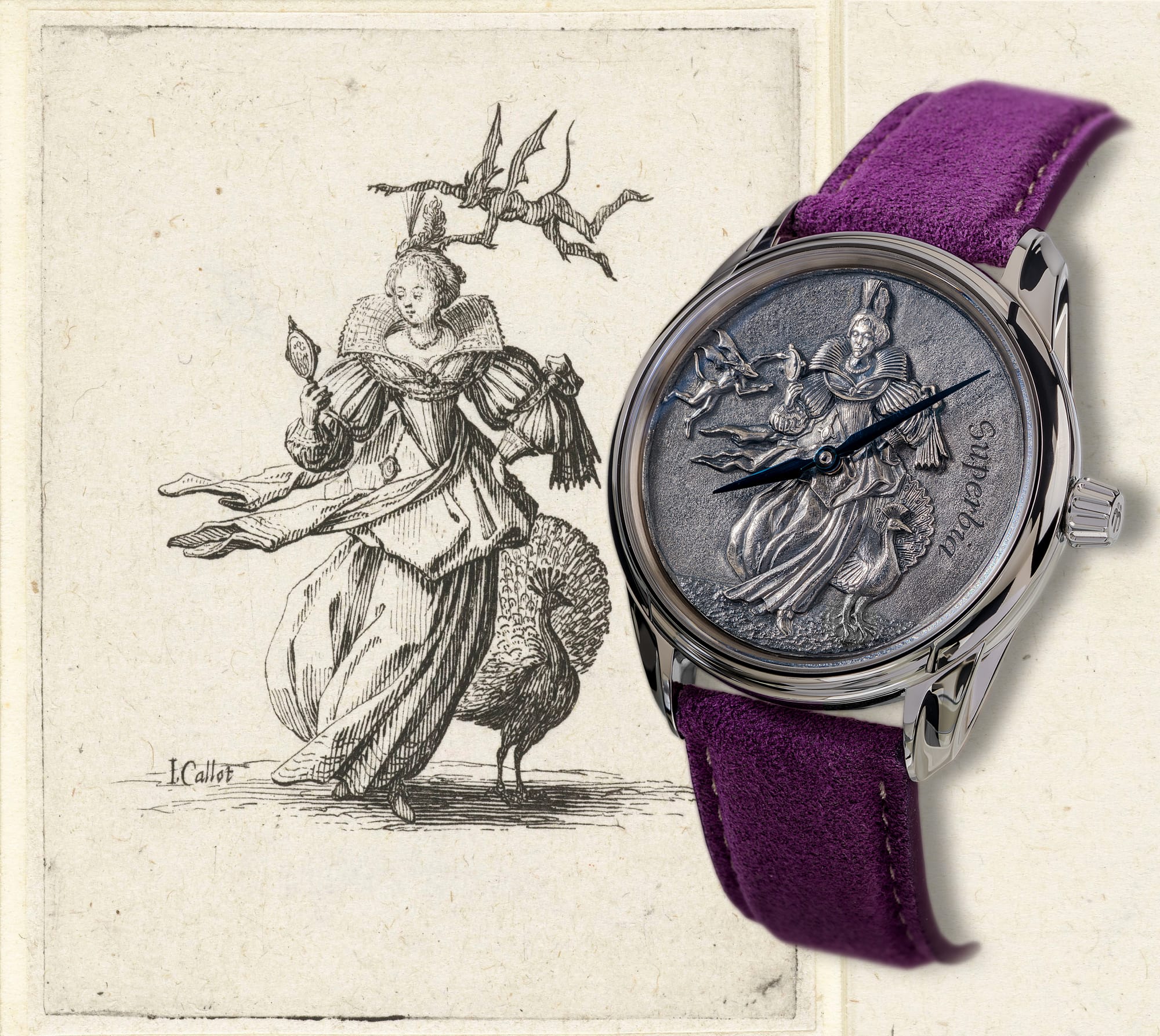
Superbia is the most iconographically complete translation in the series. Callot's Pride, a fashionably dressed noblewoman, mirror in hand, peacock at her feet, a single branching demon above her head, survives on the dial with all its primary attributes intact. Engelbarts's principal adjustment was compositional: the demon, loosely extended across Callot's upper field, has, again, been drawn into tighter orbit on the left side of the figure within the circle. The moral register of the original, pride as self-possessed, composed, attended by vanity's symbols, carries across without revision. Purple for the strap: the royal colour of self-elevation.
The moral register of the original, pride as self-possessed, composed, attended by vanity's symbols, carries across without revision. Purple for the strap: the royal colour of self-elevation.
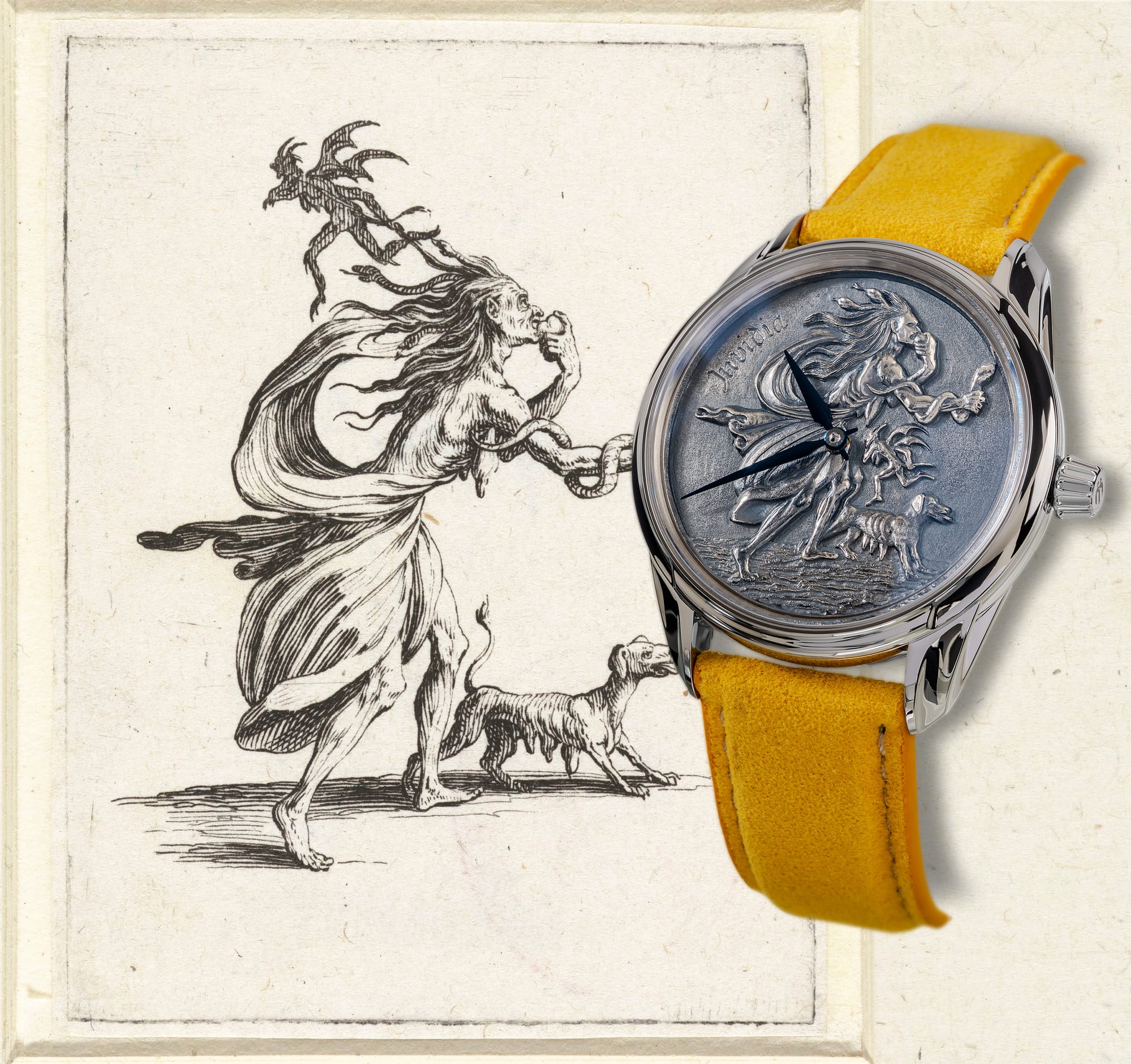
Invidia is where the distance between print and dial is perhaps most legible. Callot's Envy is his most psychologically extreme figure, barely human, emaciated, a demon pulling her hair from above, a snake coiled at her right arm, a lean hound at her heels. The grotesque distortion is the argument: envy was understood in the moral tradition as the most self-consuming of the vices, the one that destroys its host more completely than its object.
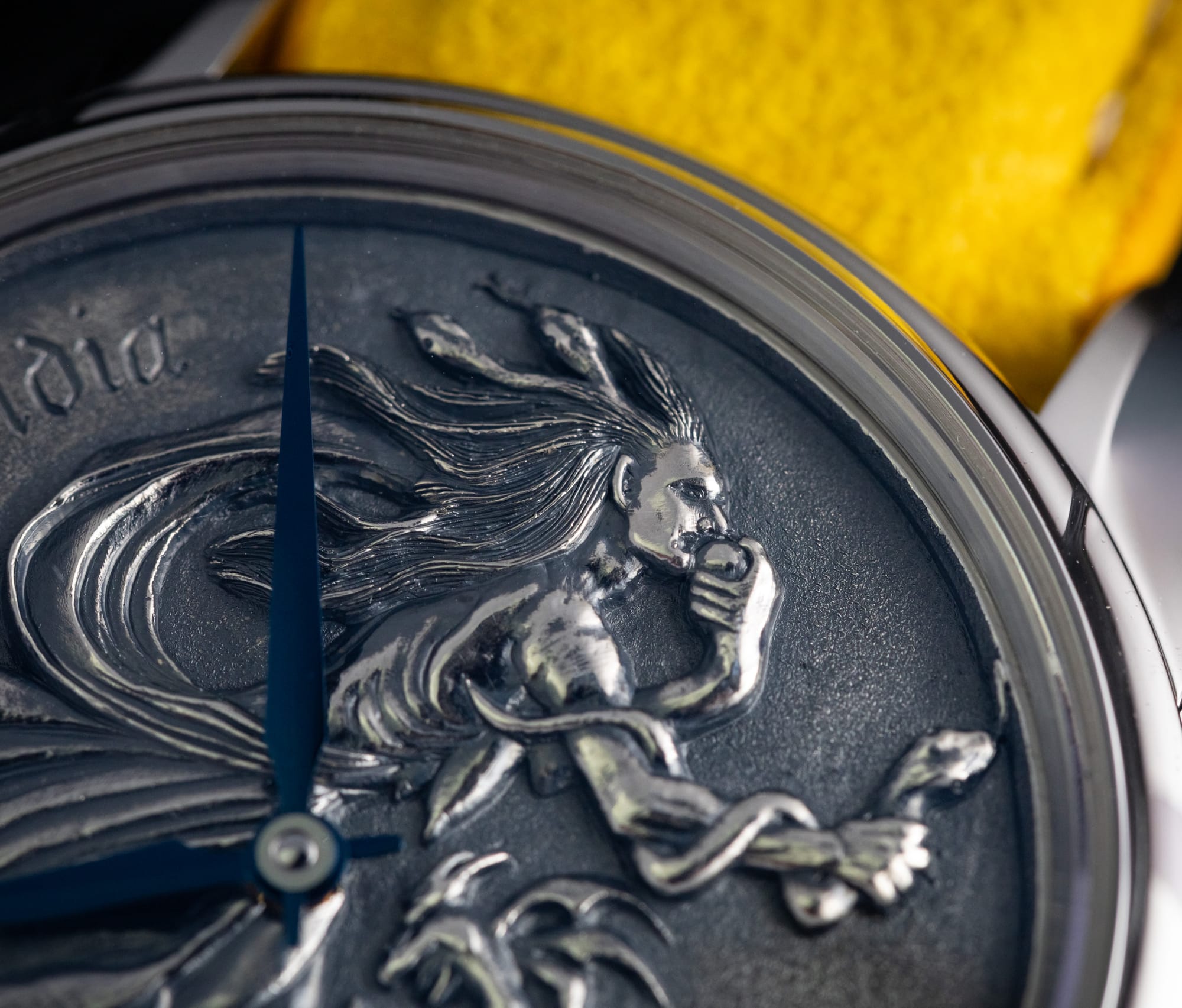
On the dial, Engelbarts has repositioned the demon to the figure's right side, physically separate and no longer pulling at her, the external torment of Callot's original replaced by a lateral presence. The snake and the hound survive, the emaciation survives in attenuated form, but the specific violence of Callot's image, a figure being undone from above, is resolved into something more composed. What Callot achieved through assault, Engelbarts restates through confrontation. Yellow for the strap: jaundice, the yellowing of resentment, a tradition running from antiquity through the medieval moralists.
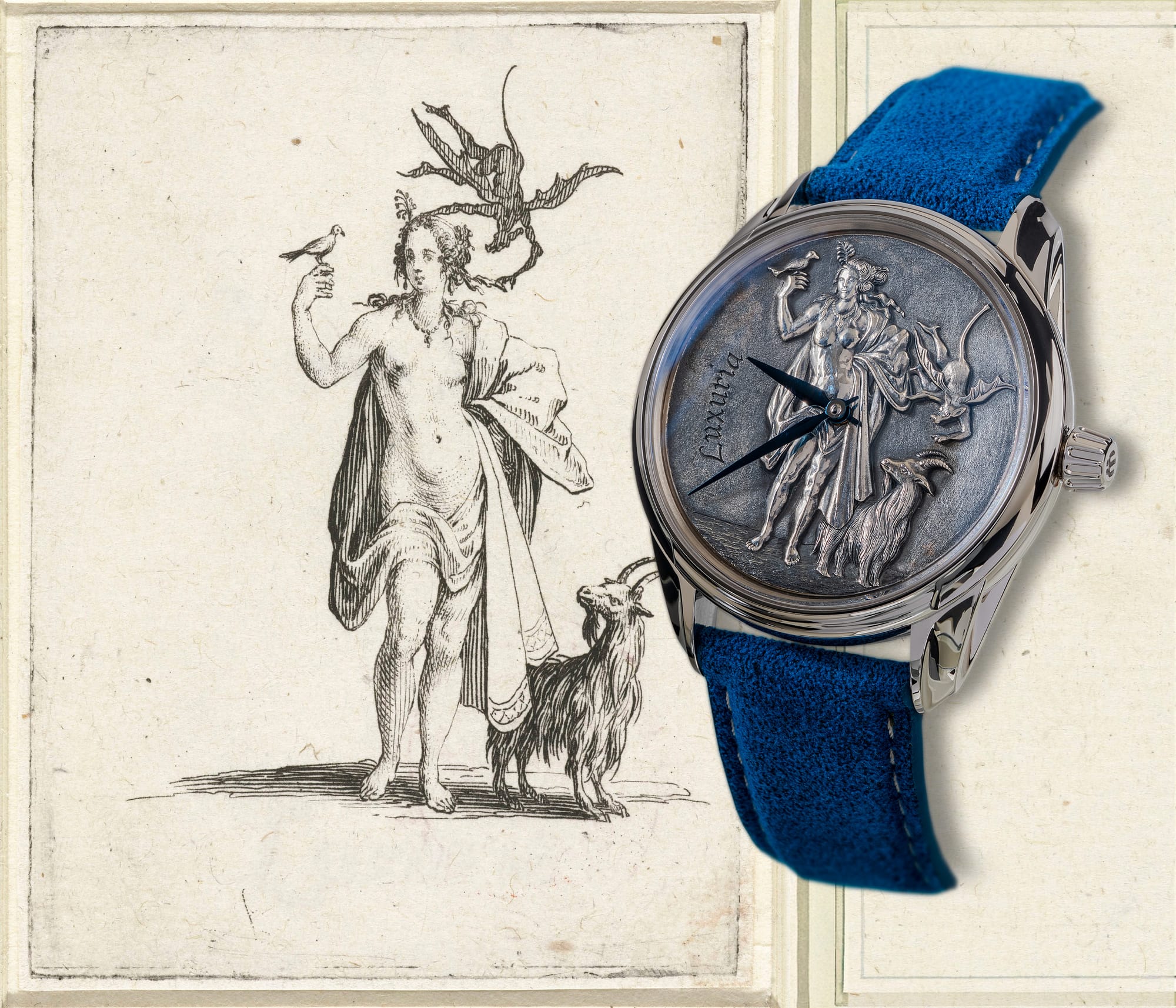
Luxuria presented the same upper-field problem as several of the others. Callot's figure, semi-nude, bird on her raised right hand, goat at her feet, demon hovering overhead, has its demonic element displaced into the upper register where the circular format cannot easily contain it. Engelbarts brought the demon down and to the right, placing it in active lateral relationship with the figure, the goat anchoring the lower register, the bird on the raised hand surviving intact. Deep cobalt for the strap: the blue of Venus, distinct from the pale blue of Acedia in precisely the way that active desire is distinct from passive inertia.
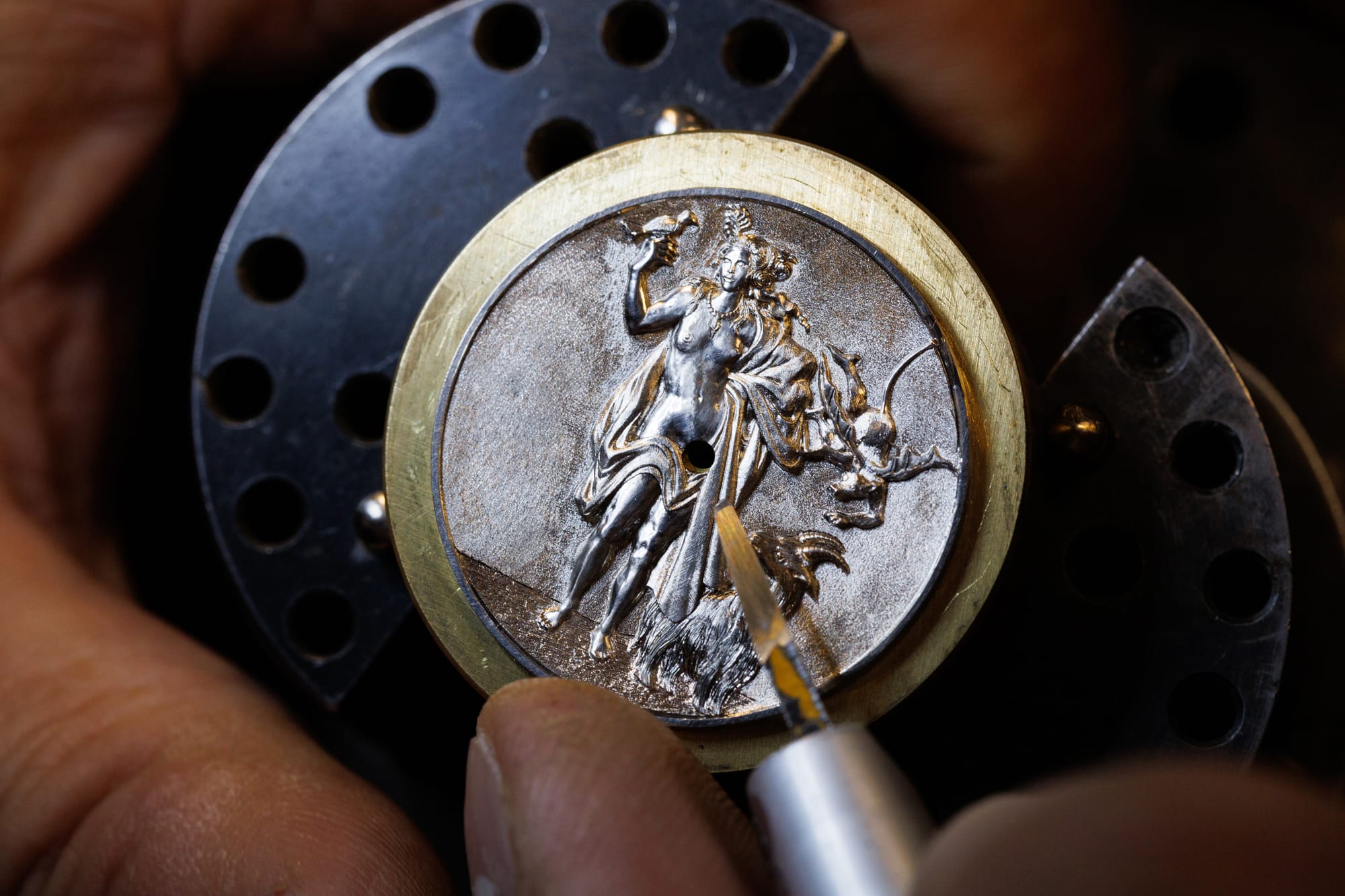
Across the seven, the colour programme was discovered rather than devised. The Gronefelds searched the iconographic tradition and found that specific colours had been attributed to each sin for centuries, rooted in the same moral theology that produced Evagrius's logismoi and Callot's playing-card figures. The result is an object that carries its programme into every element: an engraved dial, an inscribed Latin name, and a strap visible around the wrist. A person who knows the tradition reads all three simultaneously. A person who does not know the tradition knows only that the watches are beautiful and distinct. The system works at both levels of attention.
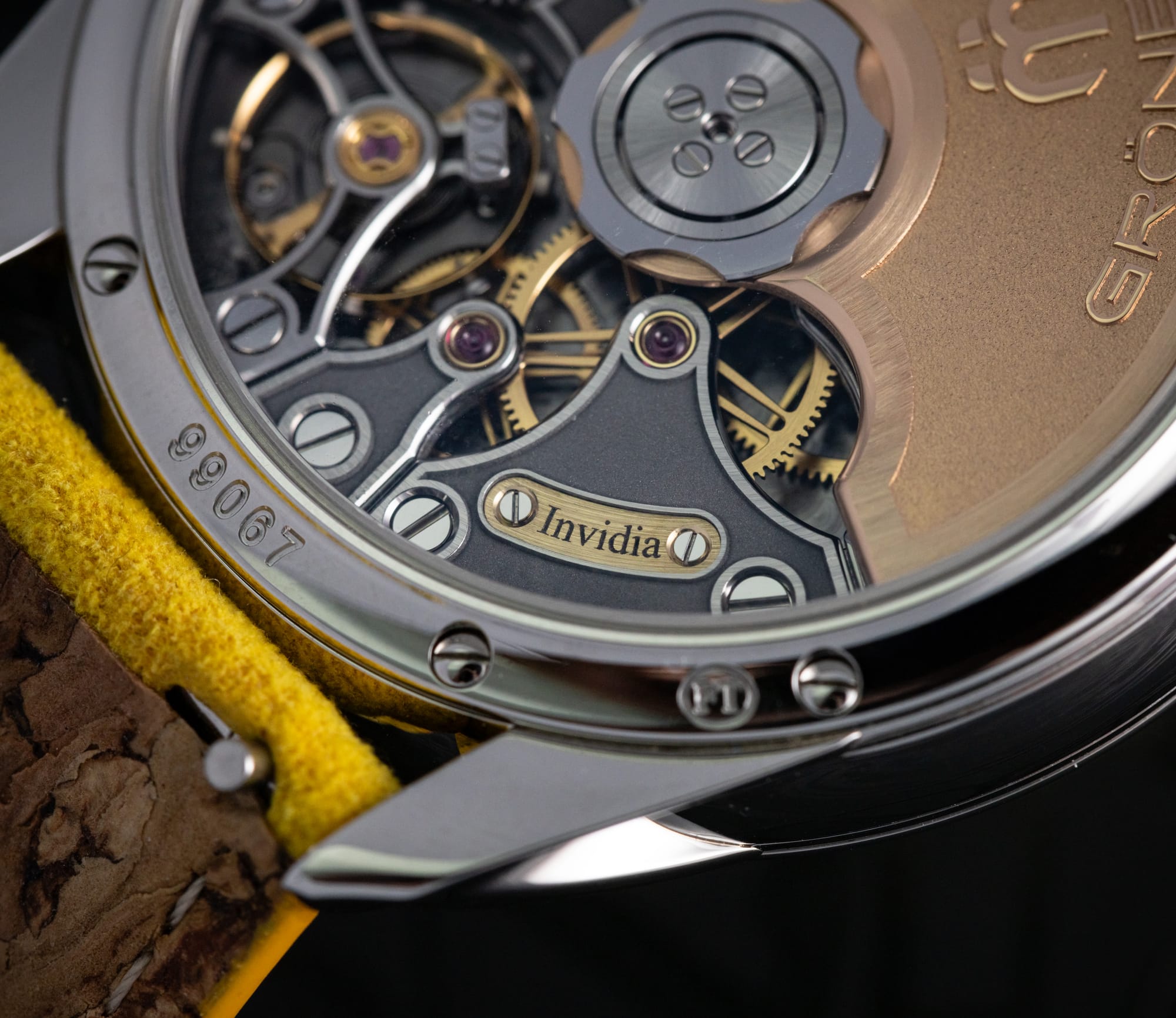
Beneath each of the seven scenes, Gronefeld's automatic Calibre G-06 runs with the same commitment to craft that Engelbarts brought to the surface above it. The movement's stainless-steel bridges are finished by hand and shaped in reference to the stepped gable facades of traditional Dutch architecture, a piece of cultural autobiography from two brothers who have spent their working lives in a tradition not their homeland's. The jewels are set in gold chatons, the bevelling done by hand to a brilliant finish. A gold plate on the movement names the sin depicted by the dial above it. The object is coherent from the outside in.
IV.
The sins tradition was, at its foundation, a theology of time. Evagrius understood the logismoi as mechanisms for the misuse of the hours God had given, each vice an attack on a specific moment, Acedia striking at midday when the day's work was most urgent, the others operating at their own hours in their own registers. Gregory described the sins as captains leading armies against the human soul at every hour of every day. Aquinas understood them as habits which shaped the whole temporal arc of a life, disordering the appetite across years until the account came due.
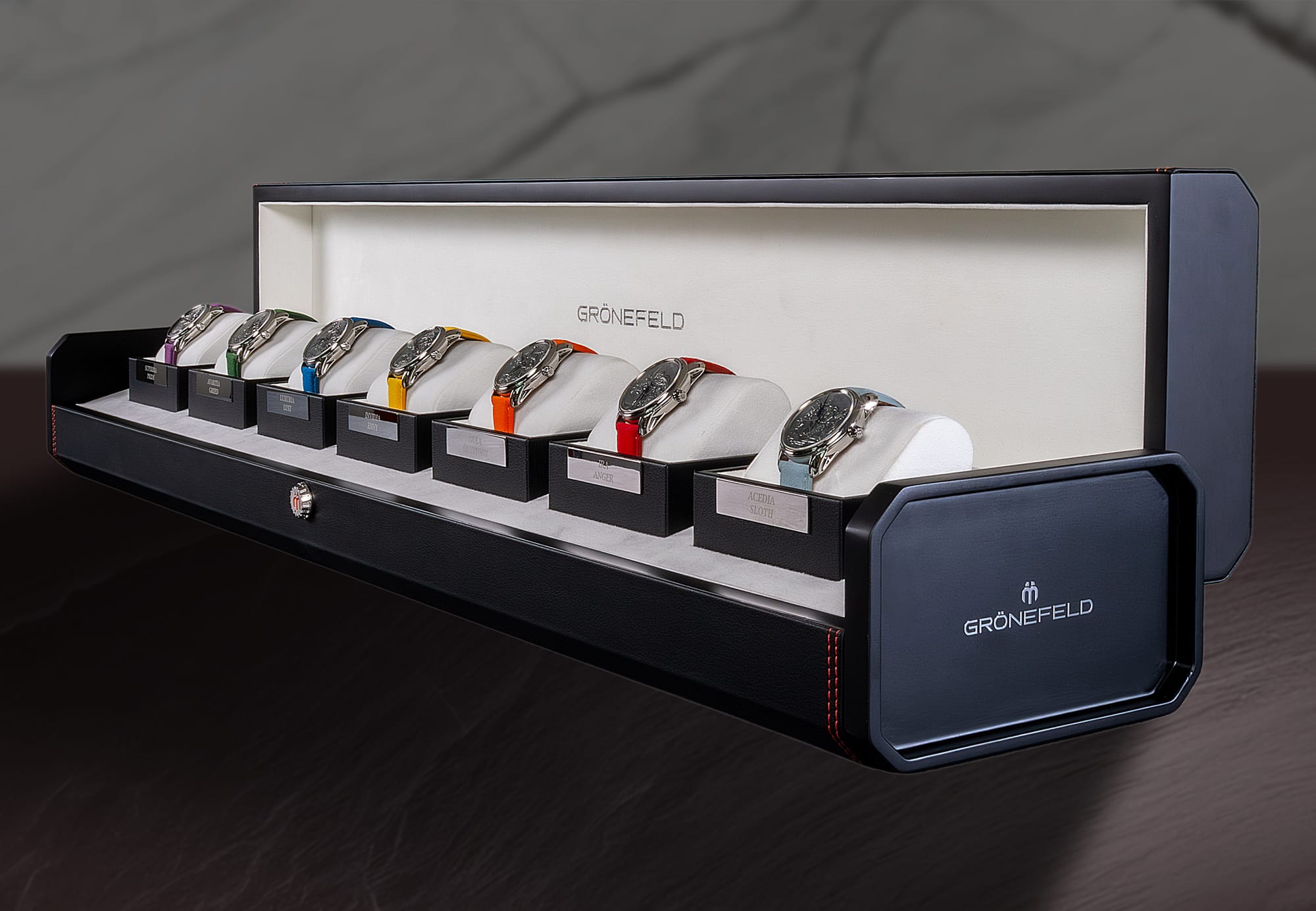
A mechanical watch is an instrument for the measurement of time. The seven dials of the Gronefeld sins collection measure the hours. They also show, raised in steel on their surfaces, the seven mechanisms by which hours are lost. The instrument that accounts for time carries, on its face, an image of everything that destroys it. Whether Engelbarts and the Gronefeld brothers reached for this paradox or simply inherited it from the tradition they drew on is beside the point. Callot understood it; the man who refused to engrave the conquest of his homeland understood that a line carries moral weight that does not belong entirely to the person who commissioned it. That understanding is present in the seven prints he made on playing-card-sized copper plates sometime around 1621, and it is present in the seven dials that a Dutch engraver made from those prints in Geneva four hundred years later, working from pixels, with a graver, for a single collector, in a one-metre box.
The tool changes. The line remains.
The prints by Jacques Callot reproduced in this story are held in the collection of the Rijksmuseum, Amsterdam, and are available through the museum's open-access digital archive at rijksmuseum.nl. The Rijksmuseum's decision to make its collection freely available to all, researchers, institutions, and individuals alike, made this story possible in more ways than one. We are grateful.