The Second Owner

Robert MacCracken Olmsted and the Custodianship of Complicated Time
Robert MacCracken Olmsted wound his clocks and watches every Monday evening. Eighty pieces, beginning to end, a ritual that consumed most of the night. He had been doing it since his student days at Princeton in the early 1960s, and he continued doing it until his death from pancreatic cancer on June 20, 2024, at the age of 83. Daylight saving changes required what his family described as additional weekend planning, a phrase that conveys the scale of what he had taken on.
He never sold a piece. He never allowed a single watch to appear at auction or in any public context. He bought from dealers and occasionally directly from the makers, kept systematic records, maintained everything himself, and spoke of the collection to almost no one outside a small circle. When Sotheby’s announced the forthcoming sale of his estate in October 2025, the watch world confronted something it had not expected: a major collection, assembled over six decades, that had been entirely invisible.
A Princeton Education in Mechanical Time
Olmsted was born in 1940 into a family with deep roots in American academic and institutional life. His great-grandfather, Henry Mitchell MacCracken, had served as Chancellor of New York University; his grandfather, John Henry MacCracken, as President of Lafayette College. His great-uncle Henry Noble MacCracken ran Vassar College for three decades. Vassar’s Olmsted Hall of Biological Sciences is named for his father, Robert Groves Olmsted, a Yale graduate and dedicated trustee of the college. The family understood stewardship of institutions.
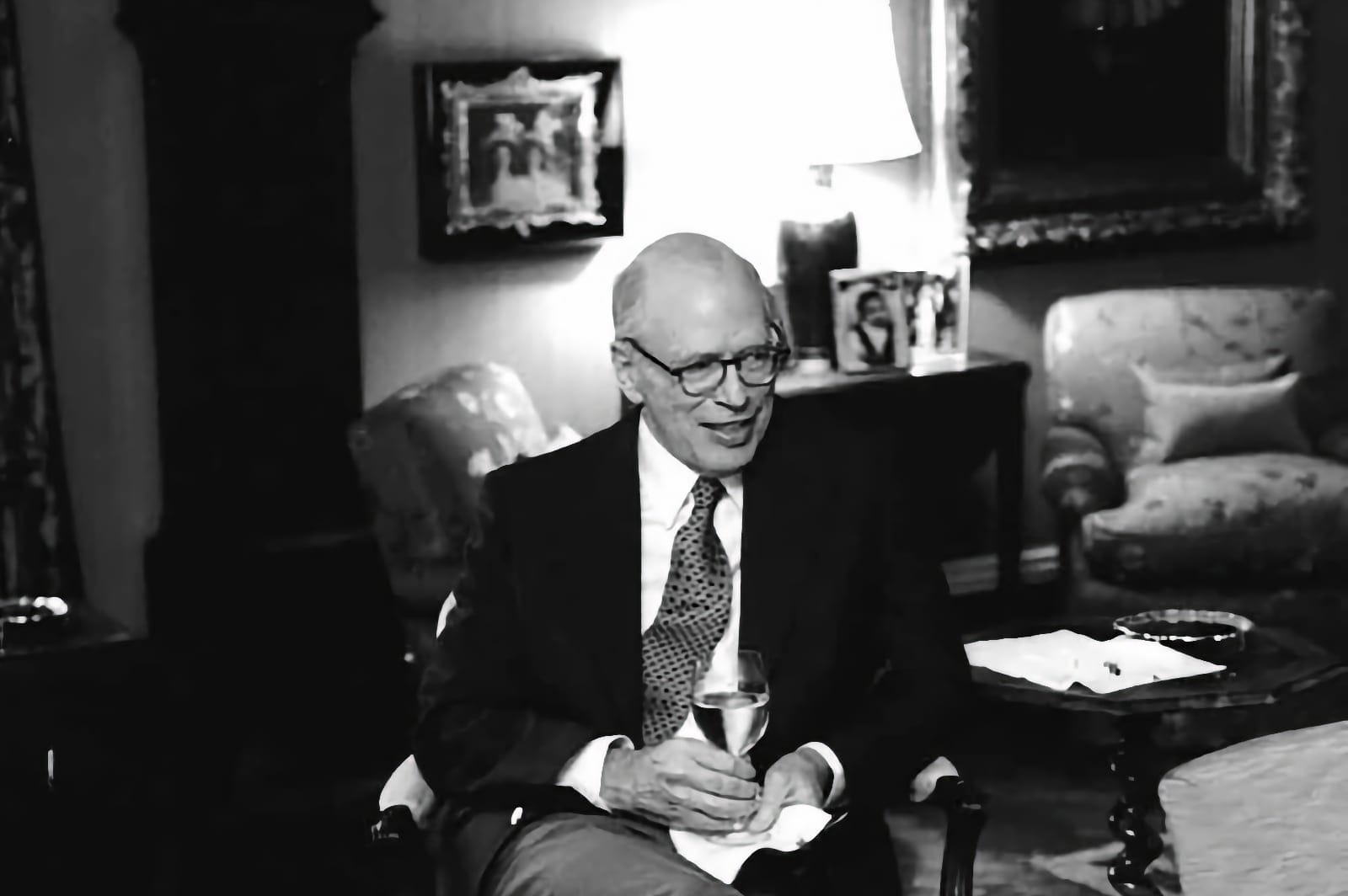
Olmsted attended Pomfret School in Connecticut, where he lettered in soccer, wrestling, and rowing, then took an engineering degree at Princeton in 1963 and an MBA from Columbia Business School in 1965. His career was spent at Auchincloss & Lawrence in Rockefeller Centre, where he worked as a financial analyst and investment adviser for the better part of four decades. He served as Treasurer of the Pomfret School and The Spence School; sat on the boards of the Windham Foundation in Grafton, Vermont, and MacDowell in Peterborough, New Hampshire. He was, by any conventional measure, a quietly successful man of affairs.
But the collecting had started earlier than any of that. The family story traces it to a boyhood moment when he disassembled his grandmother’s clock. Not from mischief, it seems, but from the engineer’s instinct to understand how a thing works before he could be content to own it. He carried that instinct forward. By 1971, eight years after graduating, he already had roughly 75 watches of exceptional caliber.
Ephraim Greenberg and the Morehead Estate
In 1965, shortly after completing his MBA, Olmsted acquired through the New York dealer Ephraim Greenberg three watches that had belonged to John Motley Morehead III, who had died that same year. Morehead was a figure of considerable range: president of Union Carbide, mayor of Rye, New York, United States Ambassador to Sweden from 1930 to 1933, founder of the Morehead Planetarium at the University of North Carolina, and recipient of the gold medal of the Royal Swedish Academy of Sciences, at the time the only foreigner ever to be so honoured. That Olmsted, then 25 and freshly graduated from Columbia Business School, with no public reputation as a collector, acquired three of the most extraordinary pieces from that estate says something about either his nerve, his judgment, or both.
Greenberg was a New York dealer who specialised in watches of historical importance. In 1965, he sold Olmsted three of the most extraordinary pieces from the Morehead estate for $11.000, a substantial amount. Why a 25-year-old newly minted MBA with no public reputation as a collector acquired them, rather than someone more established, the record doesn’t say. What the record does show is that Olmsted kept all three for 59 years without selling a single piece, which, whatever Greenberg’s reasons for the transaction, turned out to be the right outcome.
The Morehead Commission: Two Movements in One Case
Morehead had commissioned at least three watches from Patek Philippe over his lifetime. The earliest, made in 1906, was a yellow gold grande et petite sonnerie clockwatch with minute repeating, an impressive piece in its own right, but conventional in its architecture. The other two were not.
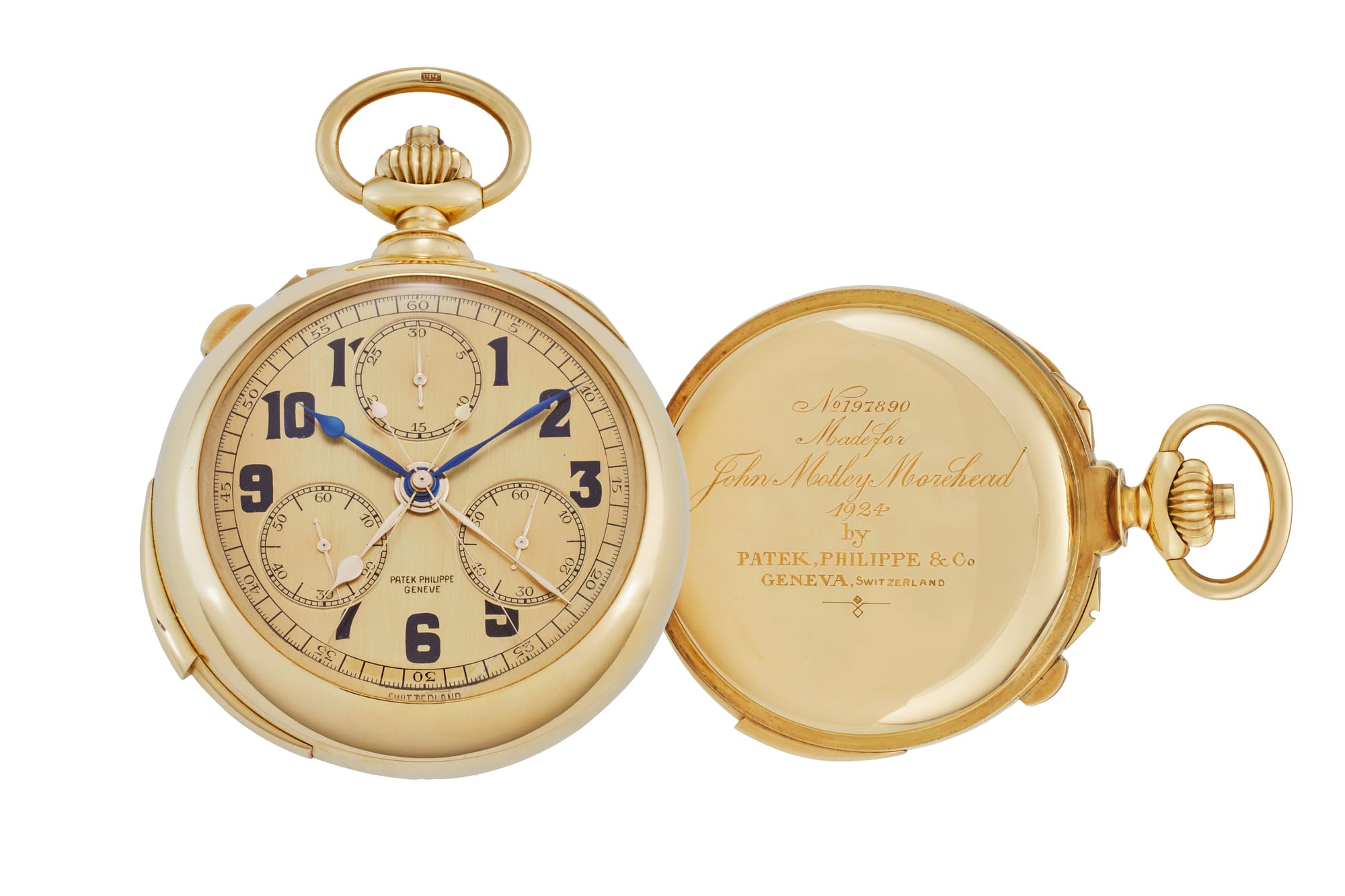
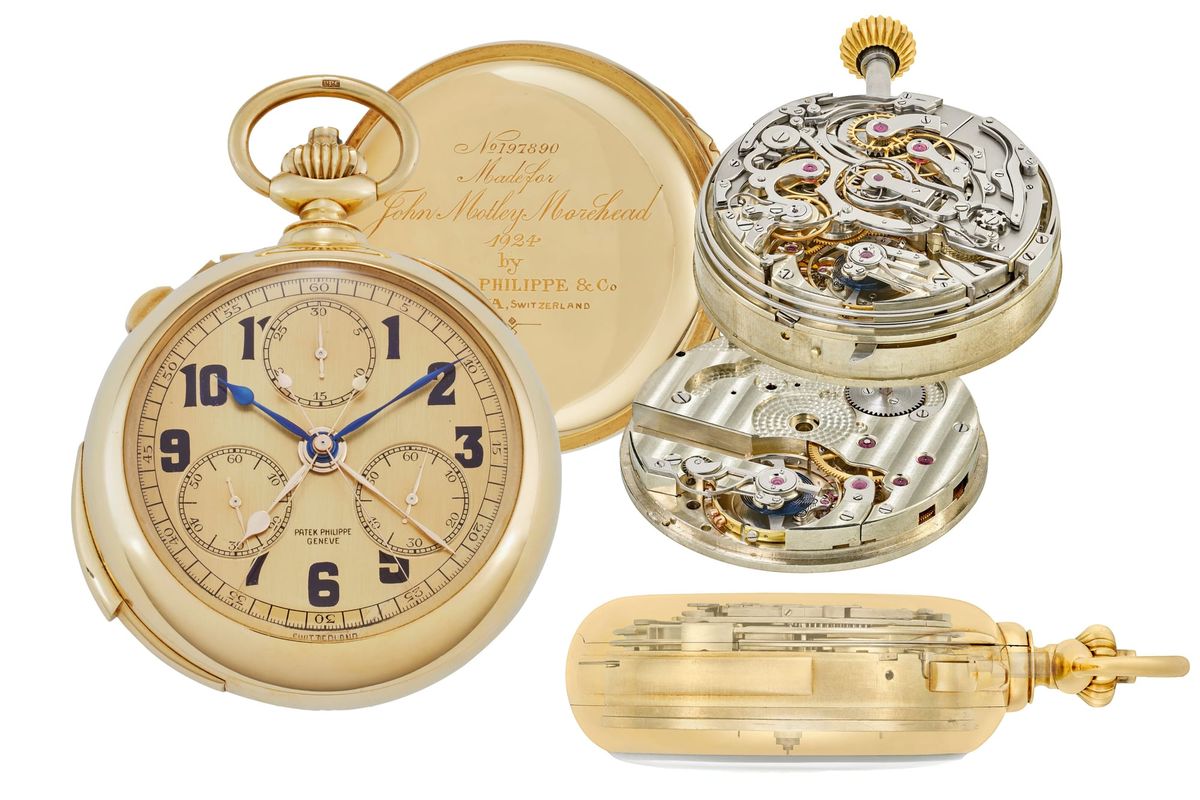
The 1920 double-movement minute repeater and the 1924 double-movement split-seconds chronograph with minute repeater together constitute one of the most extraordinary pairs of watches recently discovered. Each contains two entirely independent movements integrated within a shared plate-and-bridge structure. All-tough highly unusual, two movements within a single case were not, in themselves, a novelty; Breguet’s resonance watches had placed independent movements in sympathetic proximity, their balance wheels deliberately coupled to level out each other’s rhythm. The Morehead watches invert that logic entirely. Here, the two movements are designed to remain mechanically isolated from one another. They do not interact. They share nothing except the case that contains them and the crown that winds them both, one movement clockwise, the other counterclockwise. Once both mainsprings reach full wind, the crown locks, refusing further rotation. Two sets of hands display two different times.
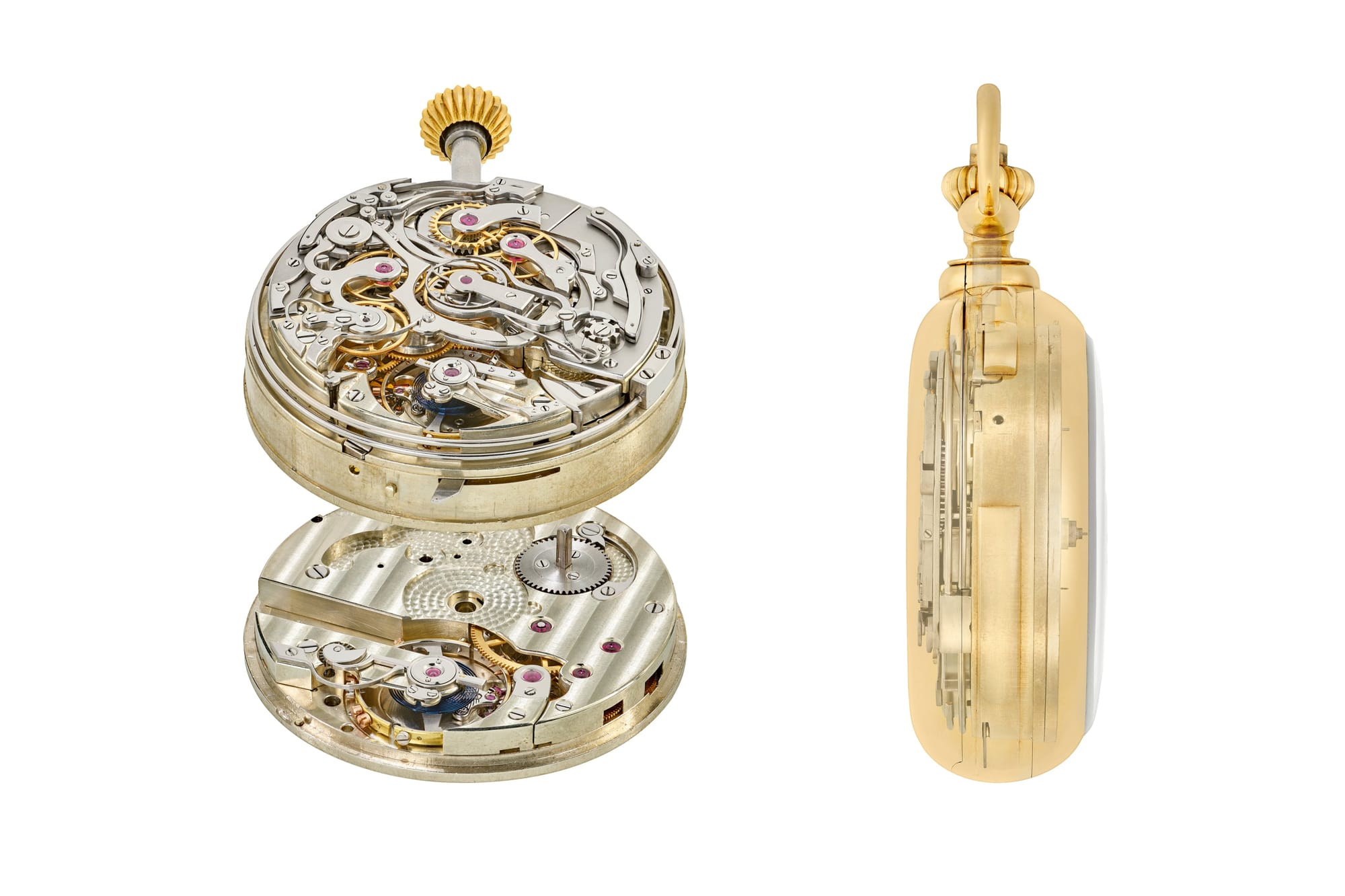
It was this specific bidirectional winding architecture through a single crown, complete mechanical isolation between the two movements, and the astronomical function that isolation enabled, that was without precedent in the documented literature. Sotheby’s stated plainly that before the emergence of the Olmsted collection, no watch of this construction was publicly known to exist. The Patek Philippe Museum had the movement numbers in its ledgers, but it did not know what those movements represented.
This last fact deserves dwelling on. The manufacture that built these watches had, over the course of a century, lost the institutional knowledge of their construction. Peter Fries, curator of the Patek Philippe Museum, confirmed that the company was unaware that the Morehead pieces featured double movements. The numbers existed in the archive, but the unusual architecture had not survived in corporate memory.
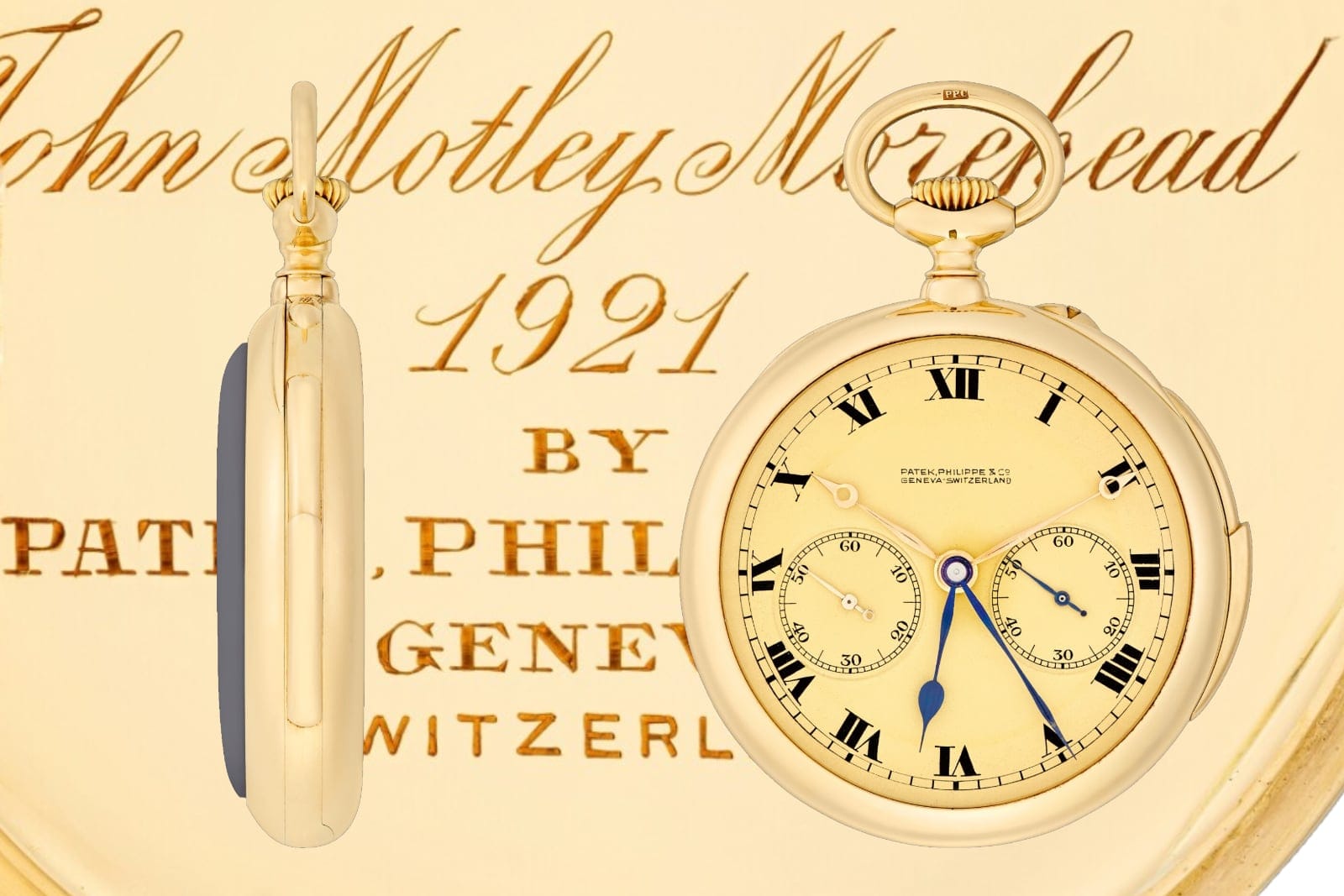
Olmsted knew. He had wound them every Monday for fifty-nine years, feeling through the crown in both directions, learning the precise moment when both mainsprings reached their limit, and the mechanism refused further input. The knowledge that Patek Philippe had lost, a private collector in New York had kept alive through the simple discipline of weekly maintenance.
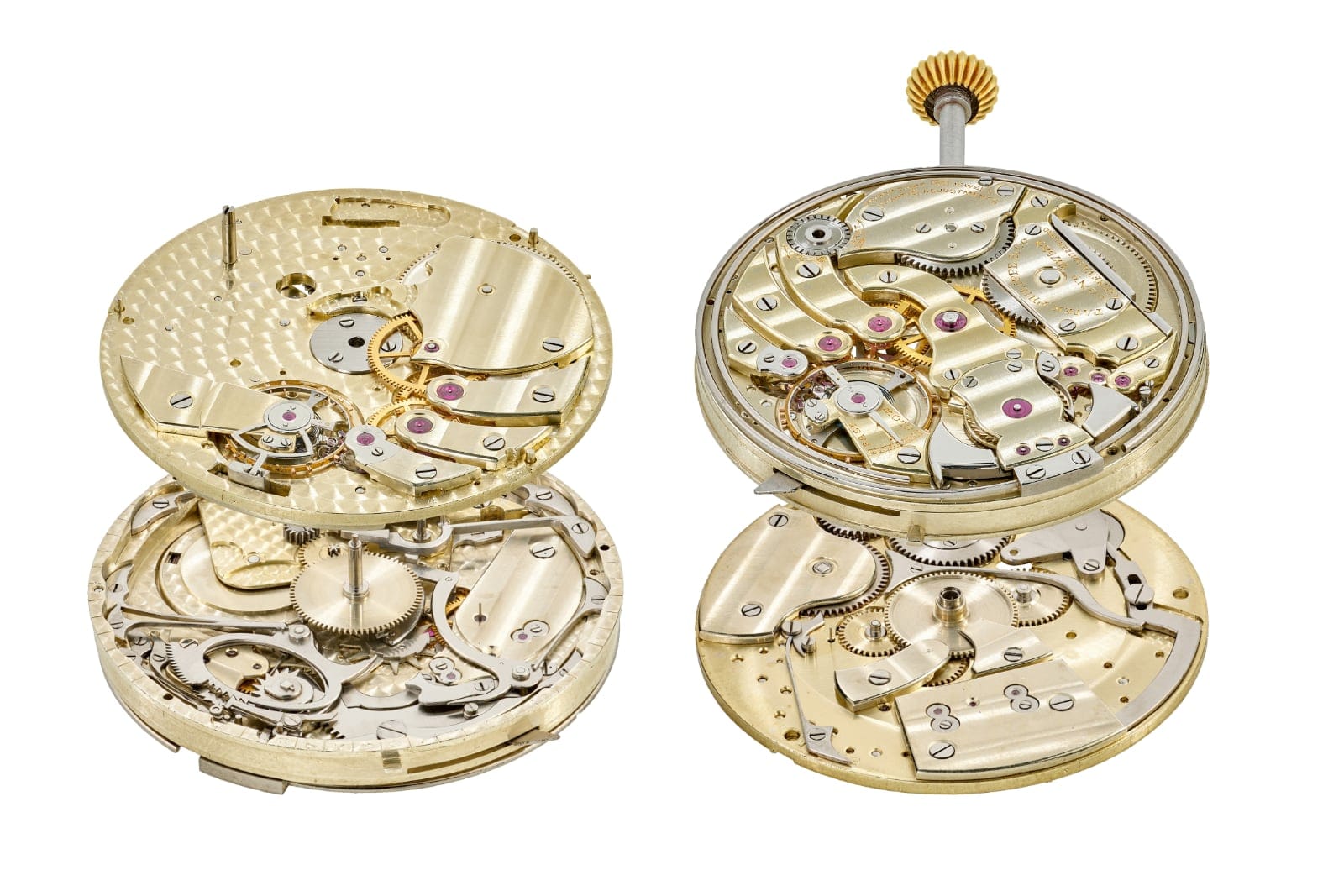
The purpose of the double movement was almost certainly astronomical. Morehead was a serious astronomer, serious enough that he later founded the Morehead Planetarium and Science Centre at the University of North Carolina, Chapel Hill, an institution that would go on to train eleven of the twelve astronauts who walked on the Moon, including the crew of Apollo 13, whose celestial navigation training at Morehead proved critical when their onboard navigation systems failed. A man of this orientation would have needed to track sidereal time: the rotation of the Earth relative to the fixed stars, rather than the Sun. A sidereal day runs 23 hours, 56 minutes, and 4.0916 seconds, approximately four minutes shorter than the solar day astronomers otherwise lived by.
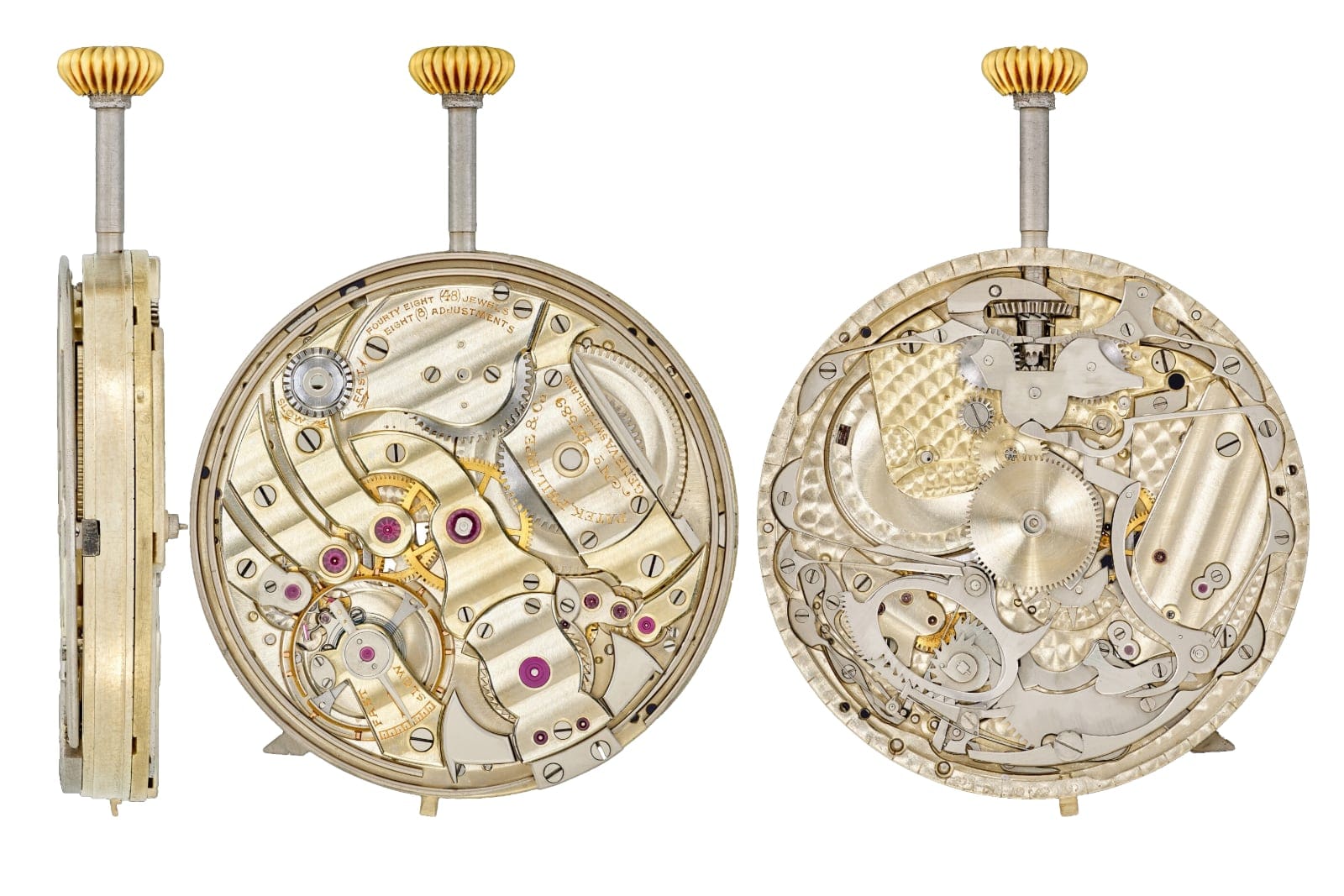
The gear ratio required to express this differential within a single movement, 365.25/366.25, was technically achievable but would have introduced compounding errors over time. Morehead and Patek Philippe chose instead to build and integrate two movements, each doing what movements do perfectly well, running independently: one tracking solar time, one sidereal, the relationship between them visible in the gradual divergence of the two sets of hands. The 1920 minute repeater, the earlier and slightly simpler of the two pieces, confirms this function explicitly in its Sotheby’s catalogue description: the gold hands indicate sidereal time, the blue hands a standard 24-hour day. The 1924 split-seconds chronograph with minute repeater adds further complication to the same essential architecture.
Thomas Emery’s Clock
The third great discovery of the Olmsted collection was acquired eleven years after the Morehead watches, in 1976: a silver-and-gold Patek Philippe presse-papier desk timepiece, movement no. 198.159, case no. 292.119, made in 1928 and sold in 1933. Olmsted kept it on his nightstand for the remaining forty-eight years of his life.
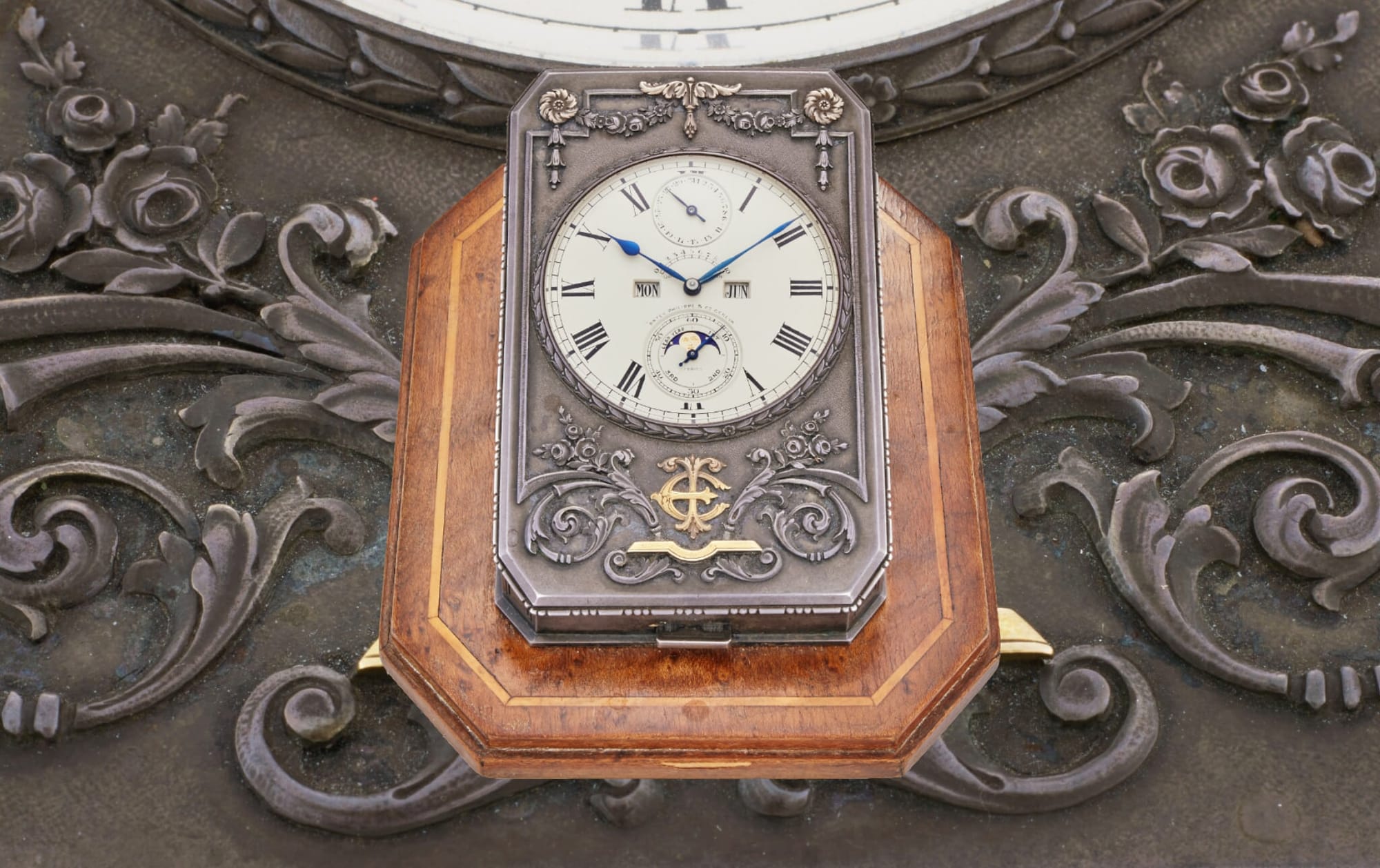
Only three such clocks were ever made. The first two were commissioned by James Ward Packard and Henry Graves Jr., the legendary American collectors whose commissions through the 1920s and 1930s produced some of the most technically ambitious watches ever attempted. Those two examples now reside in the Patek Philippe Museum in Geneva. The third, made for Thomas Emery, whose family owned Emery Industries, a Cincinnati chemical company, had remained entirely unknown to the wider world until it surfaced at the Olmsted estate. Emery died in 1975; Olmsted acquired the clock the following year, making him only its second owner.
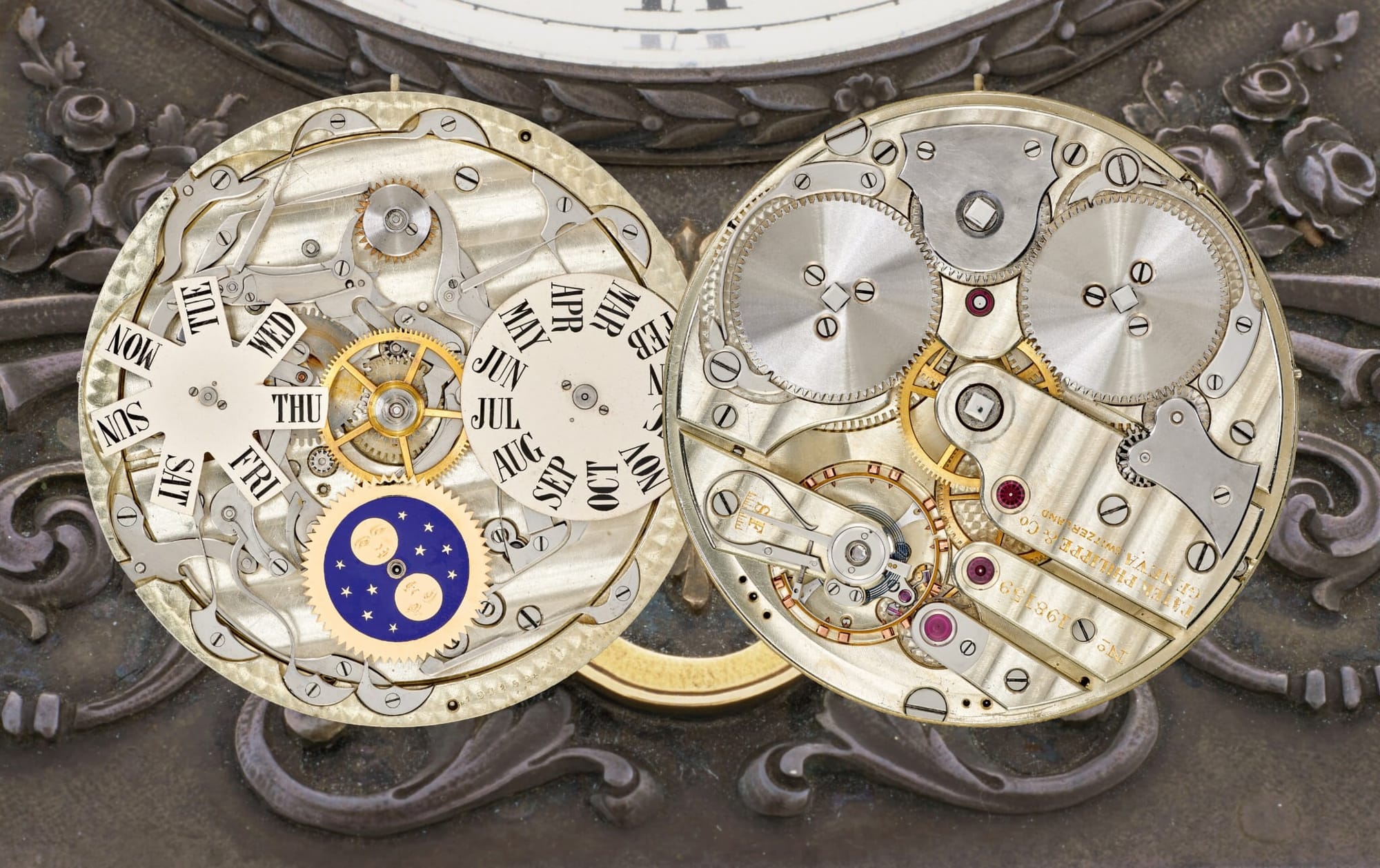
The clock shows perpetual calendar, moon phases, and a ten-day power reserve indicator. It is mounted on a wood base and housed in an engraved silver case of considerable ornamental sophistication. The movement carries one further distinction: a diamond endstone for the balance, a refinement absent from both the Graves and Packard examples, and one that Patek Philippe reserved for its most exceptional commissions. In April 2025, several months before the Olmsted auction, Patek Philippe presented a new complicated desk clock at Watches & Wonders in Geneva, inspired by the historic Packard and Graves examples. Its reception underlined the contemporary appetite for pieces of this lineage and, in a single stroke, established a powerful market context for the original Emery clock.
Sidereal Time and the Grosse Pièce
The most complicated watch in the Olmsted collection was not a Patek Philippe. It was a piece Olmsted had acquired in 1970, six years after the Morehead watches, from a very different tradition: the Audemars Piguet “Grosse Pièce,” No. 16869, made for the London retailer S. Smith & Son, started in 1914, shown at the Geneva Watch Exhibition in 1920, and delivered in 1921.
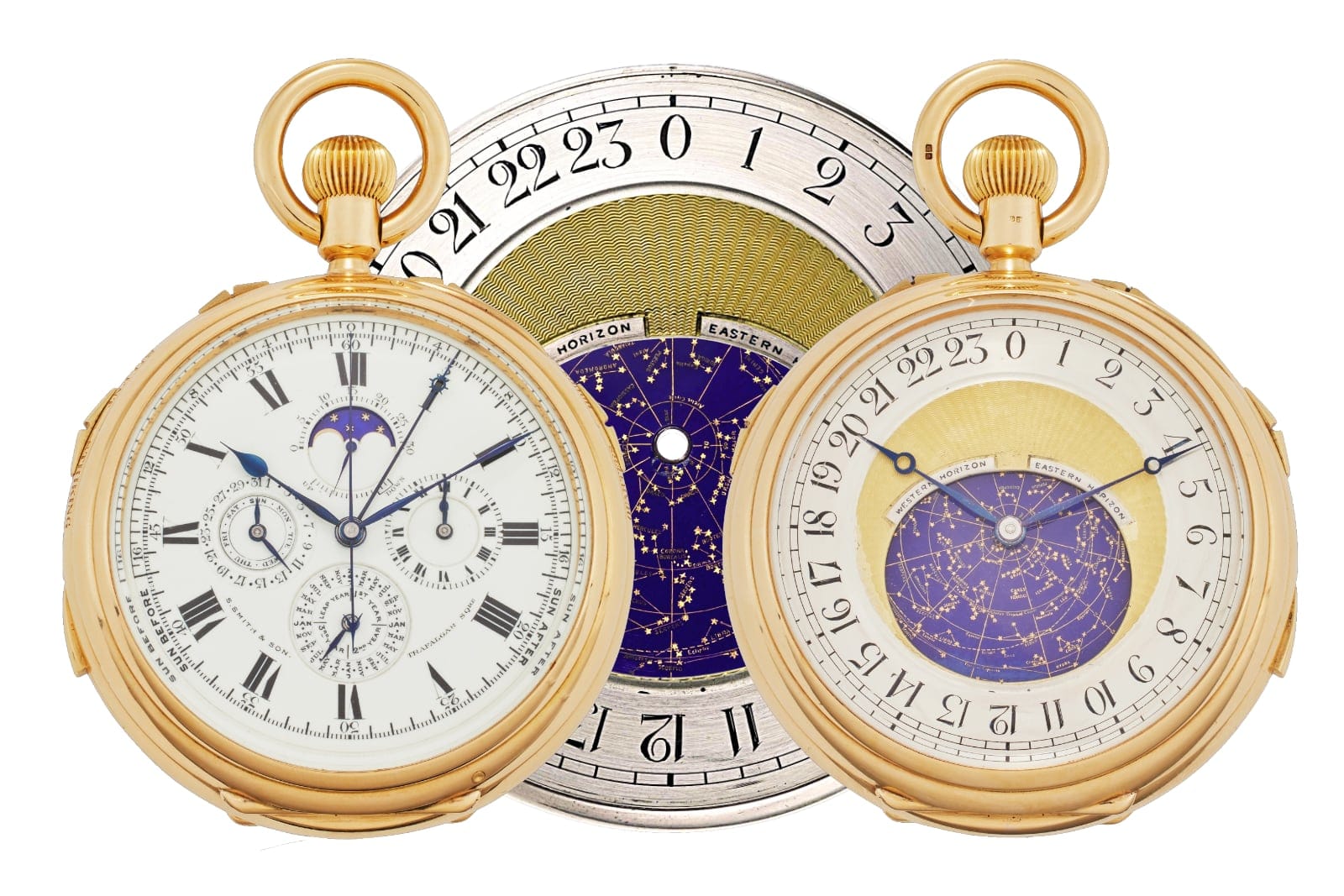
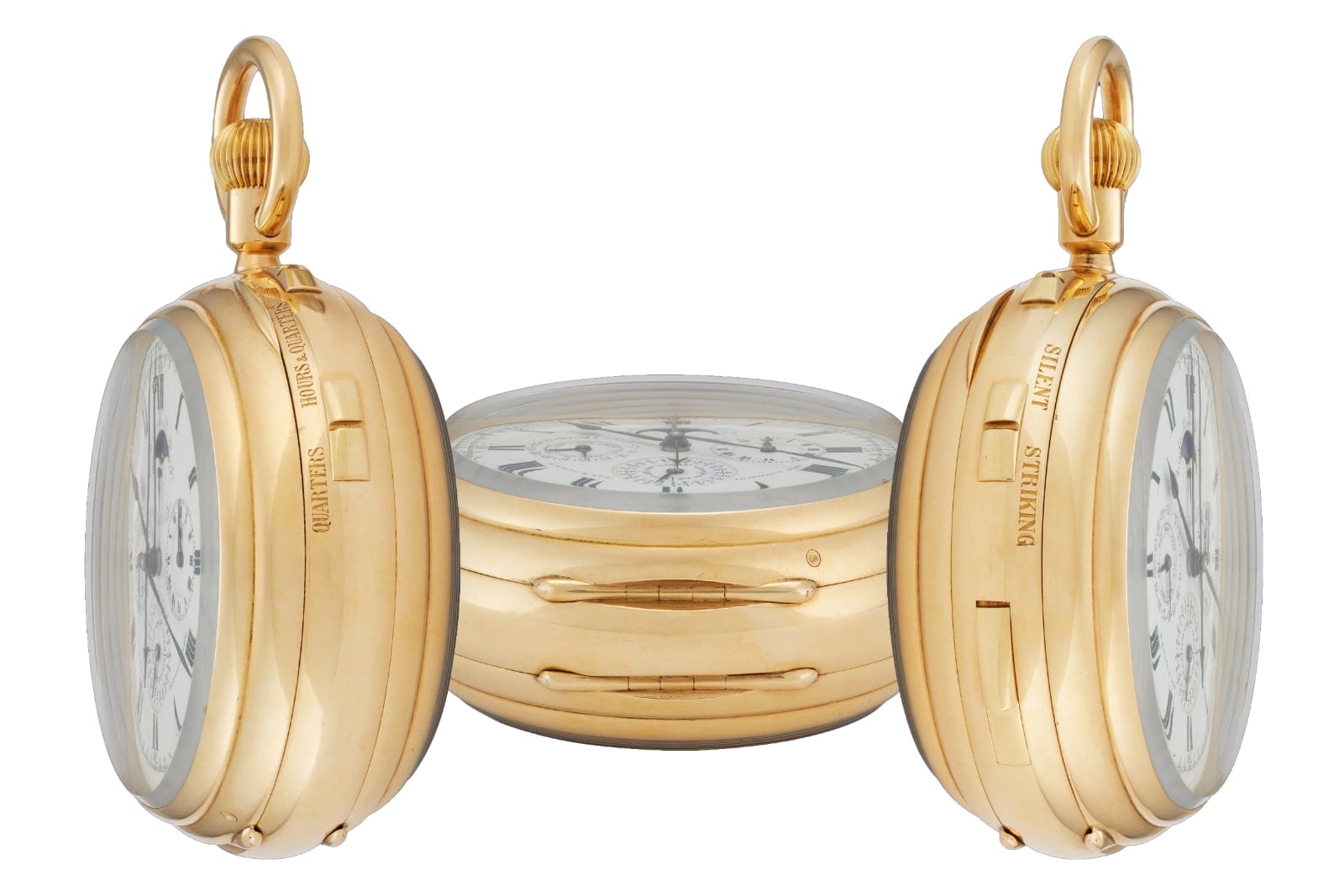
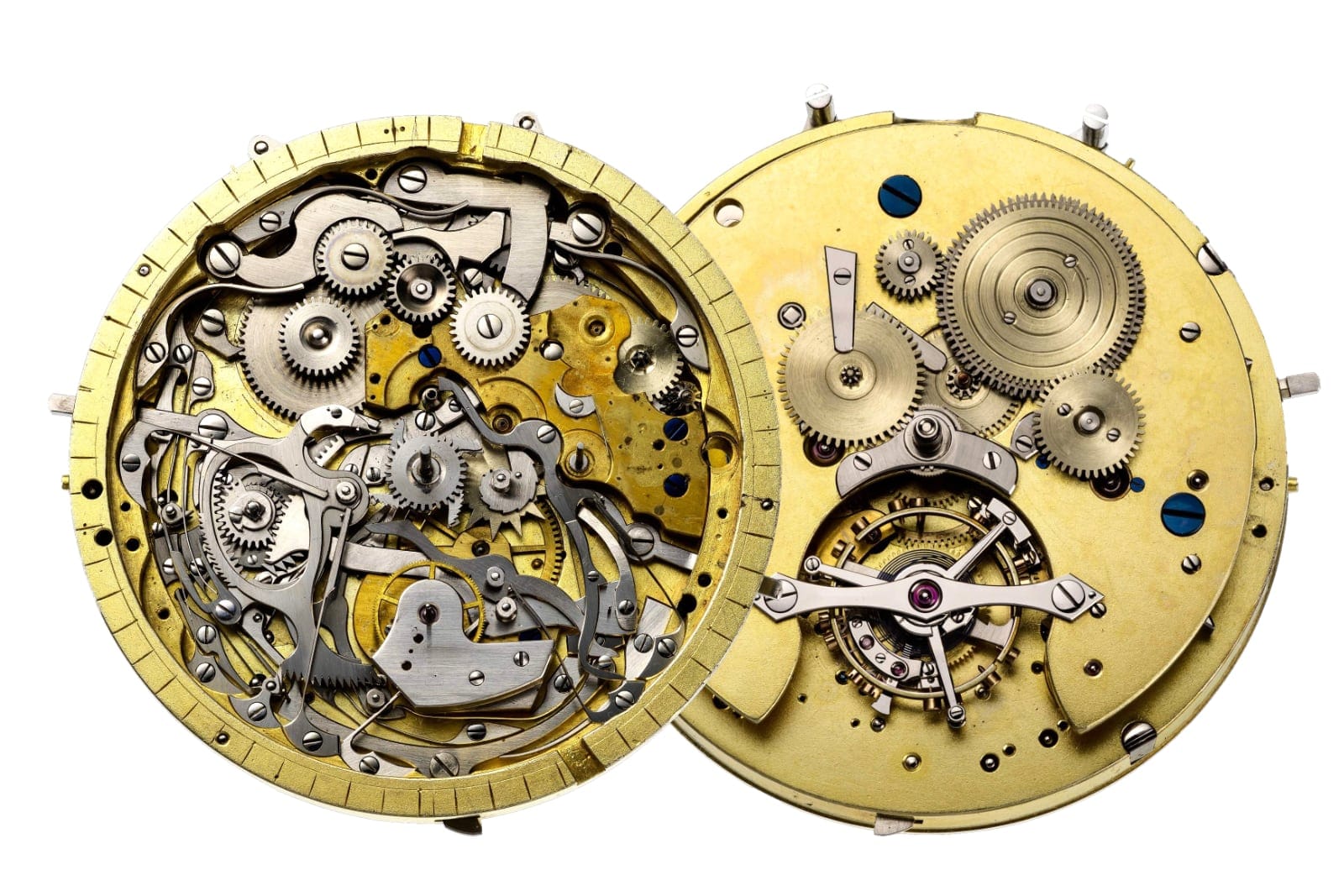
The Grosse Pièce carries eighteen complications. It is double-dialled and double open-faced, with a one-minute tourbillon, minute repeating, grande et petite sonnerie with day and night indication, split-seconds chronograph with 60-minute and 12-hour registers, perpetual calendar, moon phases, equation of time, and power reserve. It is the only known Audemars Piguet watch to incorporate an astronomical star chart, depicting eighteen constellations in the night sky above London. And it displays 24-hour sidereal time.
That last detail places the Grosse Pièce in direct conversation with the Morehead watches. Two collectors, Morehead in America and whoever ultimately received the Grosse Pièce through S. Smith & Son in London, independently arrived at the same horological obsession within roughly a decade of each other: the need to track stellar time alongside solar time, to carry on the wrist not just the clock of commerce but the clock of the heavens. The Morehead watches solved the problem through two independent movements. The Grosse Pièce solved it through a single, extraordinarily elaborate movement. Different architectures, the same question.
Olmsted held both solutions for decades, winding them every Monday evening, maintaining in his apartment the two dominant answers to a problem most watchmakers had never been asked to consider. Gisbert Brunner documented the Grosse Pièce in his 1993 book Audemars Piguet: Masterpieces of Classical Watchmaking, describing it as “the crowning achievement of the company’s founders.” At the time Brunner wrote those lines, the watch’s whereabouts were unknown. It was, of course, on a shelf in New York, being wound every Monday.
Henry Graves and the English Makers
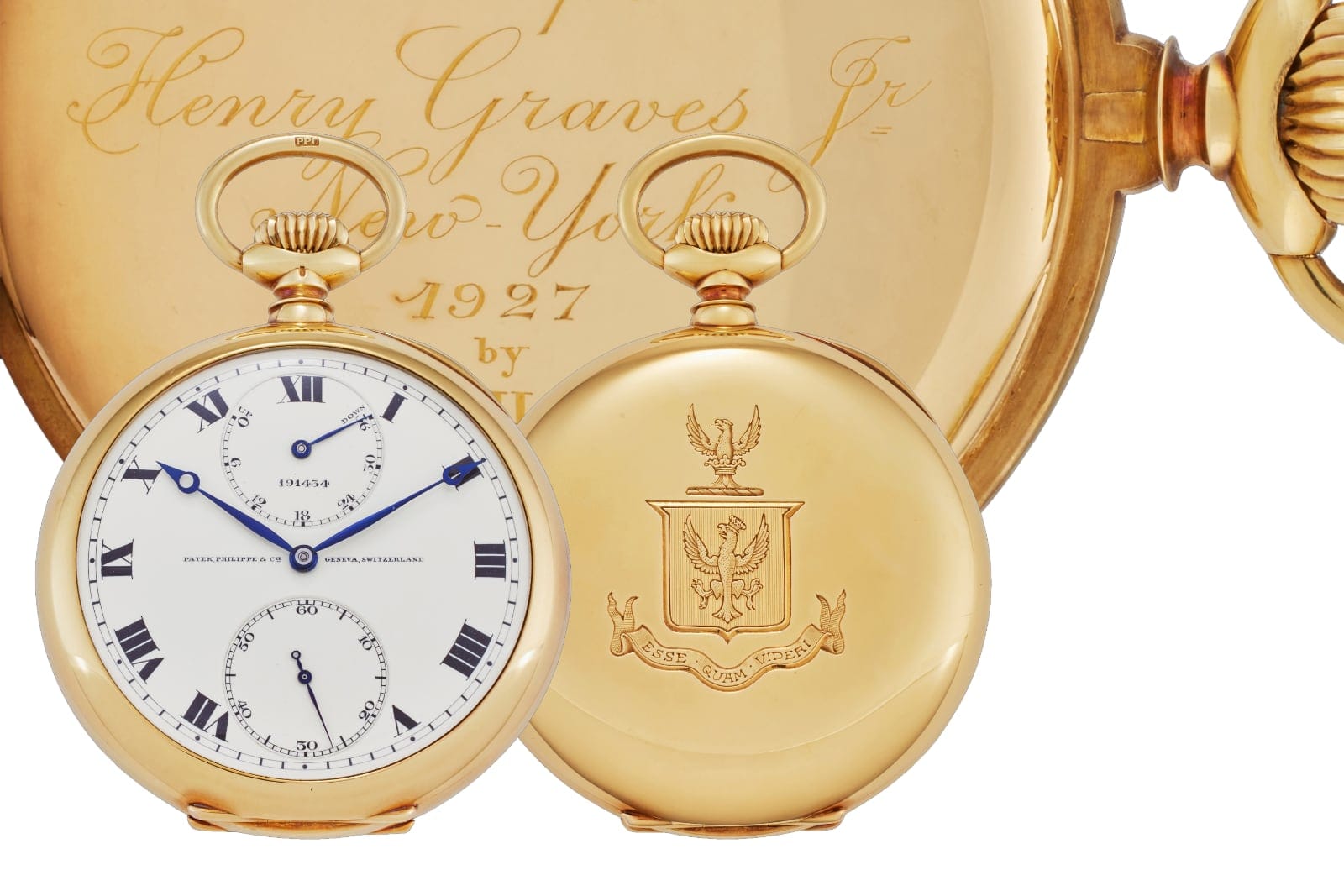
One further piece connects the Olmsted collection to the most celebrated chapter in American watch patronage. A yellow gold Patek Philippe open-faced keyless watch with power reserve indication, made in 1910 and sold in 1927 to Henry Graves Jr., was awarded First Prize at the Geneva Astronomical Timing Contest of 1926–27. The case back carries Graves's personal motto, Esse Quam Videri, "To Be, Rather than to Seem." Between 1922 and 1951, Graves commissioned at least thirty watches from Patek Philippe. Fifteen are accounted for, most in the Patek Philippe Museum. His most famous commission, the Supercomplication with its 24 complications, completed in 1933, sold at Sotheby's Geneva in 2014 for $24 million. The Olmsted example is more subtle, a precision instrument rather than an architectural monument, and its timing contest prize gives it a documented record of performance.
The collection's English holdings deserve more than a footnote, and they carry a provenance that connects to one of the great forgotten chapters of American collecting. Elliot Cabot Lee (1854–1920) was a Boston Brahmin who, between roughly 1885 and 1920, assembled one of the largest collections of complicated English watches ever brought together, entirely unknown outside a small circle until recently. Where Graves and Packard chose mostly Patek Philippe, Lee devoted himself exclusively to English makers: Dent, S. Smith & Son, J.W. Benson, J. Player & Son. He carried multiple watches at once and was rarely seen wearing the same one twice. An anecdote in The Automobile Magazine records that colleagues would ask him the time as a kind of performance, expecting to see something new on each occasion. He never disappointed them.
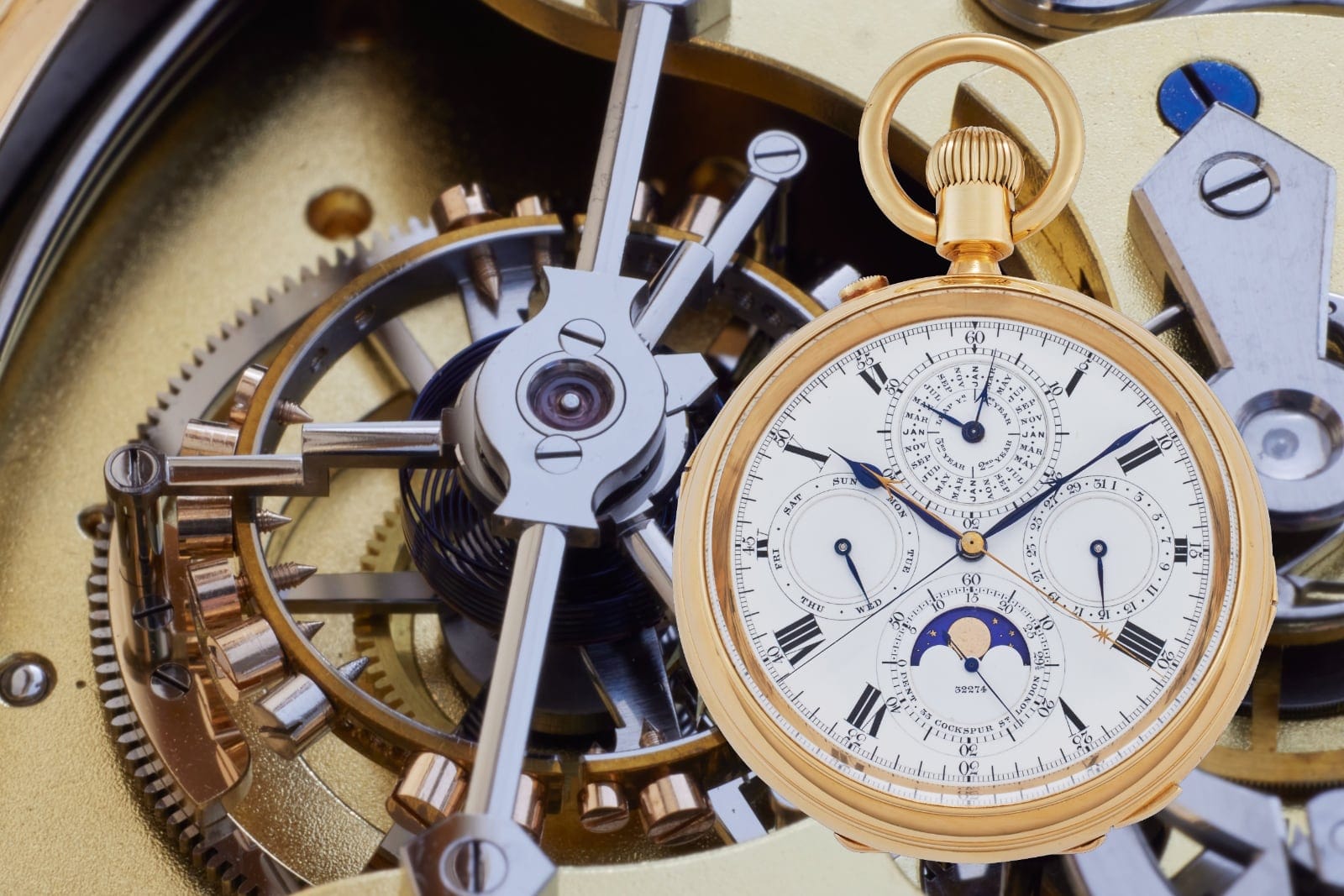
The Dent grand complication No. 32'274 in the Olmsted collection was among the most technically ambitious pieces Lee owned. It is a grande et petite sonnerie clock-watch with one-minute tourbillon, minute repetition, split-seconds chronograph with a sixty-minute totaliser, and perpetual calendar with moon phases; the ebauche supplied by Louis-Elisée Piguet in Le Brassus, hallmarked 1901–2. The movement pairs the English commitment to chronometric precision with a free-sprung balance with diamond endstone, and Swiss complications sourced from the Vallée de Joux that London firms were cagey about acknowledging. The result is a watch that belongs to neither tradition entirely, but to both fully.
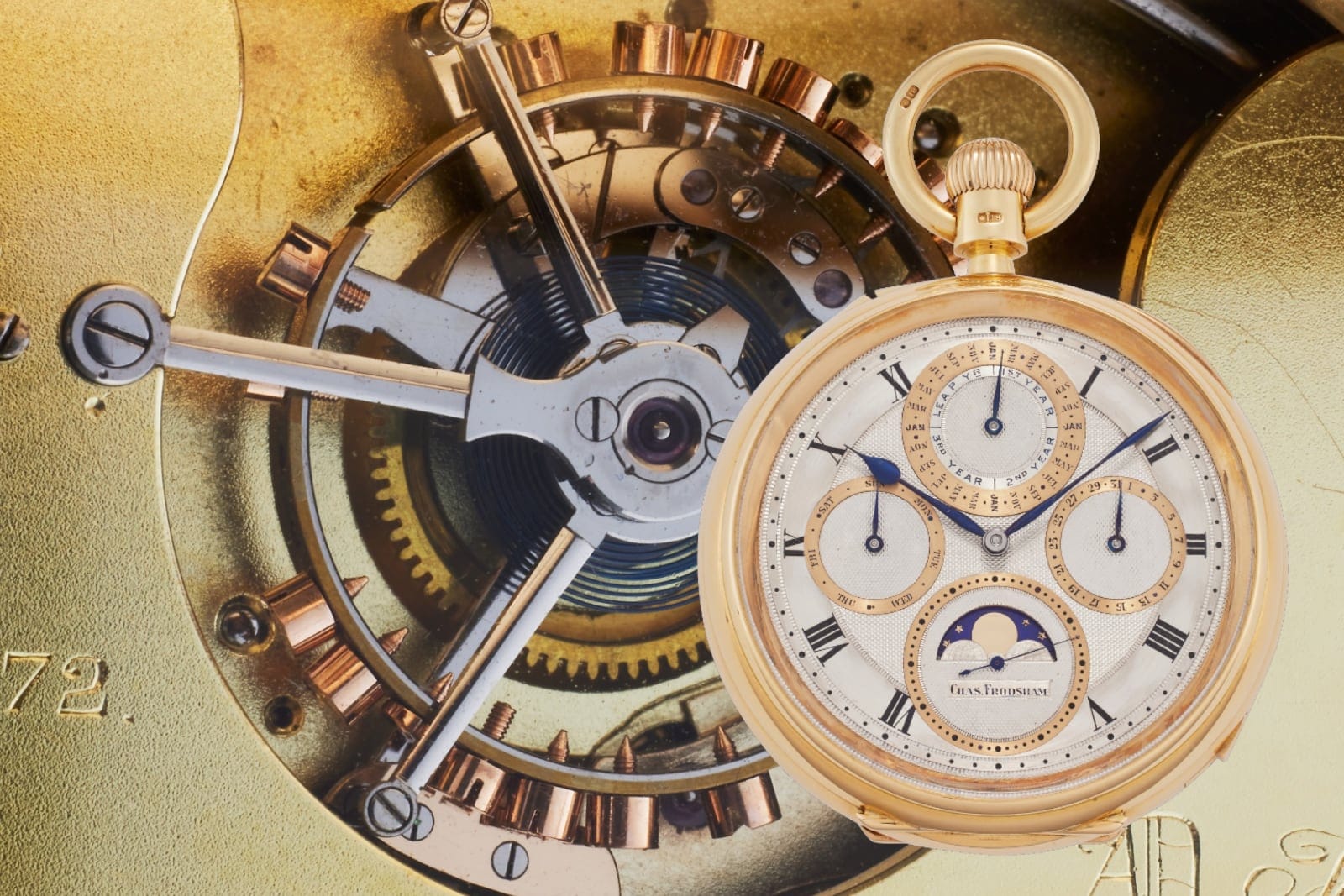
Charles Frodsham is represented by several tourbillon watches, the most exceptional a massive yellow gold one-minute tourbillon grande sonnerie clock-watch of 1915–16, one of only two examples ever produced. The 1865 Dent carriage clock carries perpetual calendar, moon phases, Whittington chimes, and equation of time on a turntable base, a grand complication in the full sense of the term. A Thomas Earnshaw chronometer of circa 1800, a Louis Berthoud pocket chronometer of circa 1809, and a Breguet et Fils marine chronometer of 1827 complete the picture, together a survey of the great tradition of precision timekeeping before the Swiss consolidation of the market. These pieces proove that Olmsted was not collecting trophies. He was assembling an argument about the history of mechanical time: where precision was born, how it migrated, and what it cost in ingenuity and craft to achieve.
December 8, 2025
Sotheby's offered the Olmsted collection at its Breuer Building in New York on December 8, 2025, as the headline sale of the house's inaugural season at that address, following a global tour through Hong Kong, London, and Geneva. Eighty-five pieces across two sales, the Important Watches live auction on December 8 and the Fine Watches online sale closing December 10, every lot sold. The 1924 Morehead double-movement split-seconds chronograph with minute repeater realised $3.7 million, against a pre-sale estimate of $500,000 to $1 million. The 1920 double-movement minute repeater brought $2.5 million. The Emery paperweight clock made $2.73 million, more than twice its high estimate. The Audemars Piguet Grosse Pièce sold for $7.736 million, a new auction record for the brand. Total across both sales: $22.4 million. Eighteen hundred and fifty bidders from sixty-five countries participated.
The two Morehead double-movement watches, notably, went to the same buyer.
Provenance as Argument
What the Olmsted sale demonstrated, beyond the specific results, was the value that sustained private stewardship confers on objects. Every piece in the collection had been acquired directly from a respected dealer or from the makers themselves. According to Sotheby’s chairman emeritus Daryn Schnipper, who oversaw the cataloguing, the majority, if not all, of the watches had never previously appeared on the auction market. Fresh to auction, in exceptional condition, with Olmsted’s documented records establishing a clear chain of ownership, these aspects combined to produce the kind of provenance that the market rewards at a premium.
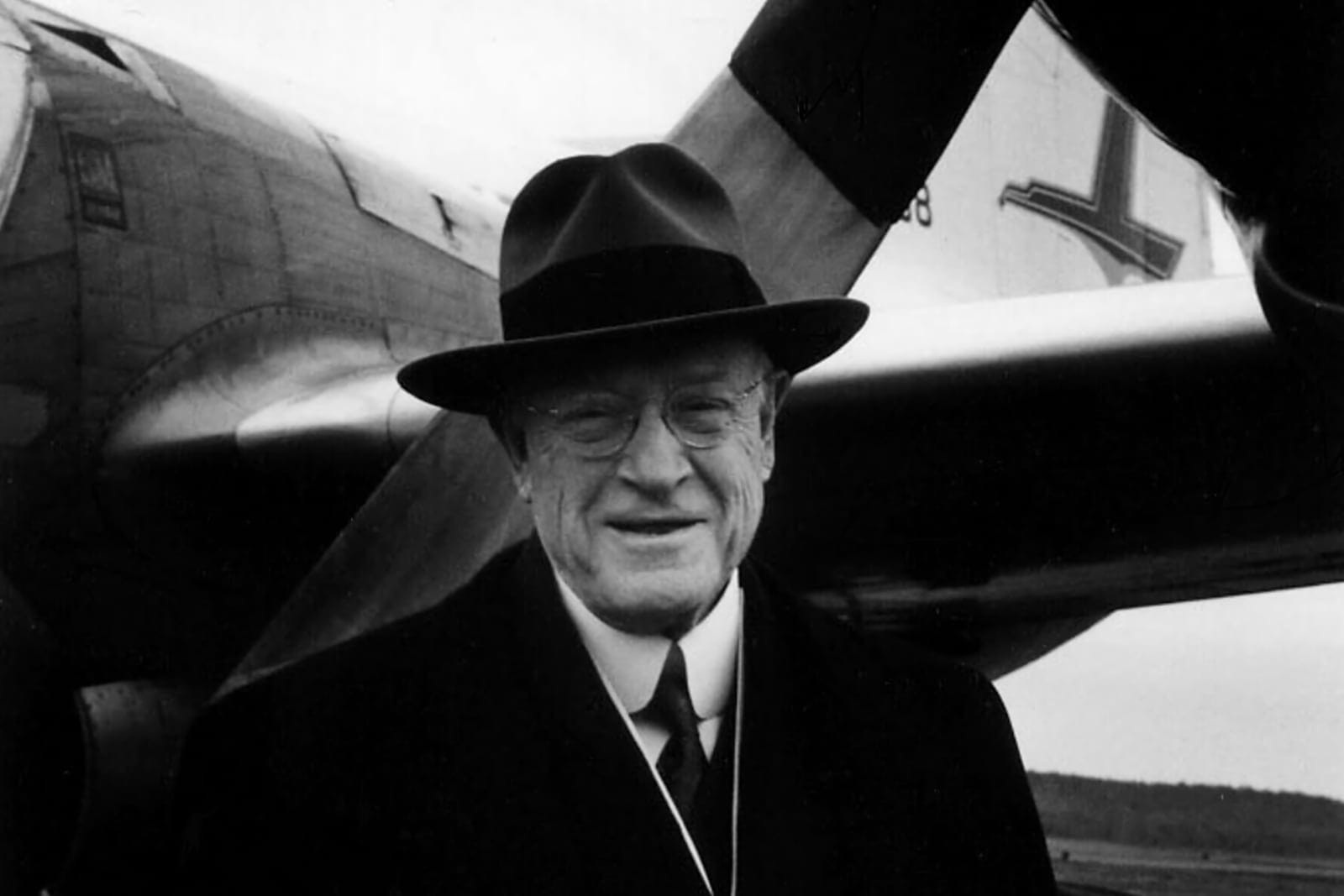
But provenance is not only a commercial category. The Morehead watches carry within their provenance a particular argument about the nature of collecting. They passed from the man who commissioned them to a 25-year-old analyst who had the sense to recognise what they were. They remained with that analyst for fifty-nine years, during which time the manufacturer that built them forgot what they contained. When they re-emerged, the knowledge of what they were had survived only because one man had handled them every Monday for fifty-nine years.
The collection now dispersed, those watches wind in hands we don’t yet know, on schedules not yet established. The Morehead double-movement pieces travel together, which seems right. Their buyer knows what they are. What remains to be demonstrated is whether the understanding that Olmsted preserved will survive this latest transfer.
That is, in the end, what the story of Robert MacCracken Olmsted asks of everyone who handles a complicated watch. Not whether you can afford it. Not whether you comprehend its mechanism, though that helps. But whether you will maintain it. Whether you will wind it. Whether, when the spring runs down, you will be there.
The Olmsted Complications Collection achieved $22.4 million at Sotheby’s New York on December 8, 2025. The 1924 Morehead double-movement split-seconds chronograph with minute repeater realised $3.7 million; the 1920 double-movement minute repeater, $2.5 million. Both were acquired by the same buyer. The Emery presse-papier clock realised $2.73 million; the Audemars Piguet Grosse Pièce, $7.736 million, a new auction record for the brand. Every lot sold. 1,850 bidders from 65 countries participated.
ACKNOWLEDGMENTS
I wish to thank Amanda Bass, Head of Luxury Communications at Sotheby's, for providing access to information and high-resolution images of the Olmsted Collection. Additional thanks to Daryn Schnipper, Sotheby's Chairman Emeritus, International Watch Division, for her scholarly research and expertise in bringing this remarkable collection to market.
All images are courtesy of Sotheby's.